10 Common Eyewear Product Development Mistakes New Startup Brands Make
July 21, 2026
The eyewear industry appears easy to enter, with many new startup brands launching products through simple OEM manufacturing and trend copying. However, most emerging eyewear brands fail in the product development stage. New overseas brands often prioritize appearance, low costs, and profit margins while ignoring eyewear’s core attributes: ergonomic comfort, facial fit, long-term wearability, and structural durability.
Product development is the foundation of a sustainable eyewear brand. Poor development decisions directly lead to poor wearing experience, high return rates, negative reviews, inventory overstock, and low repurchase rates. Even large-scale overseas marketing campaigns cannot reverse damaged brand credibility.
Based on years of OEM/ODM eyewear development experience and cooperation with global startup brands, this article summarizes 10 fatal product development mistakes commonly made by new overseas eyewear brands, with practical solutions to help brands create well-fitted, high-reputation, and market-competitive eyewear for global consumers.
Mistake 1: Prioritizing Aesthetics Over Ergonomic Wearing Comfort
Most new overseas eyewear brands focus excessively on trendy designs and viral styles to attract online traffic. They blindly pursue ultra-light frames as a selling point but ignore critical ergonomic parameters, including hinge distance, temple curvature, nose pad angle, and head circumference adaptation. Many startups hold the wrong belief that “lighter equals more comfortable”.
In fact, the top reason for eyewear returns in global markets is never poor appearance, but uncomfortable wearing experiences: head pinching, nose pressure, frame slipping, and soreness after long-hour wear. A well-engineered affordable frame always outperforms a stylish luxury frame with flawed ergonomics in user retention.
✅ Solution: Align aesthetic design with ergonomic standards. Optimize hinge spacing, nose support stress distribution, temple wrapping angle, and overall weight balance based on target regional facial data, ensuring frames are stylish, comfortable, and wearable all day.
Mistake 2: Overly Diversified Initial Product Lines
To cover broader global customer groups, many new overseas eyewear brands launch dozens of styles in their first collection, covering vintage, business, streetwear, and sports styles. This blind expansion leads to skyrocketing production and inventory costs, vague brand positioning, and diluted product competitiveness.
Without accumulated overseas user reputation, a messy product line confuses consumers and causes unsold inventory. Most startup brand cash flow crises stem from unreasonable initial product layout.
✅ Solution: Adopt a “small but precise” product strategy. Launch only 3-5 core styles for the first collection, focus on a single target audience and style, polish product details, reduce cross-border inventory risks, and accumulate initial overseas user reviews.

Mistake 3: Copying Viral Styles Without Differentiation
The global eyewear market faces severe homogenization. To cut development costs and speed up launches, most new brands copy Amazon, Instagram, and TikTok viral styles with only minor color adjustments, lacking original design and functional innovation.
Blind trend-chasing forces new brands into low-price competition with no brand memory points or product barriers. Global consumers tend to choose mature mainstream brands with higher credibility, leaving new startups with thin profit margins and no long-term development potential.
✅ Solution: Create targeted micro-innovations based on global user pain points. Develop exclusive styles for high-prescription users, round/square face shapes, and large head circumferences to build unique selling points that distinguish the brand from generic viral products.
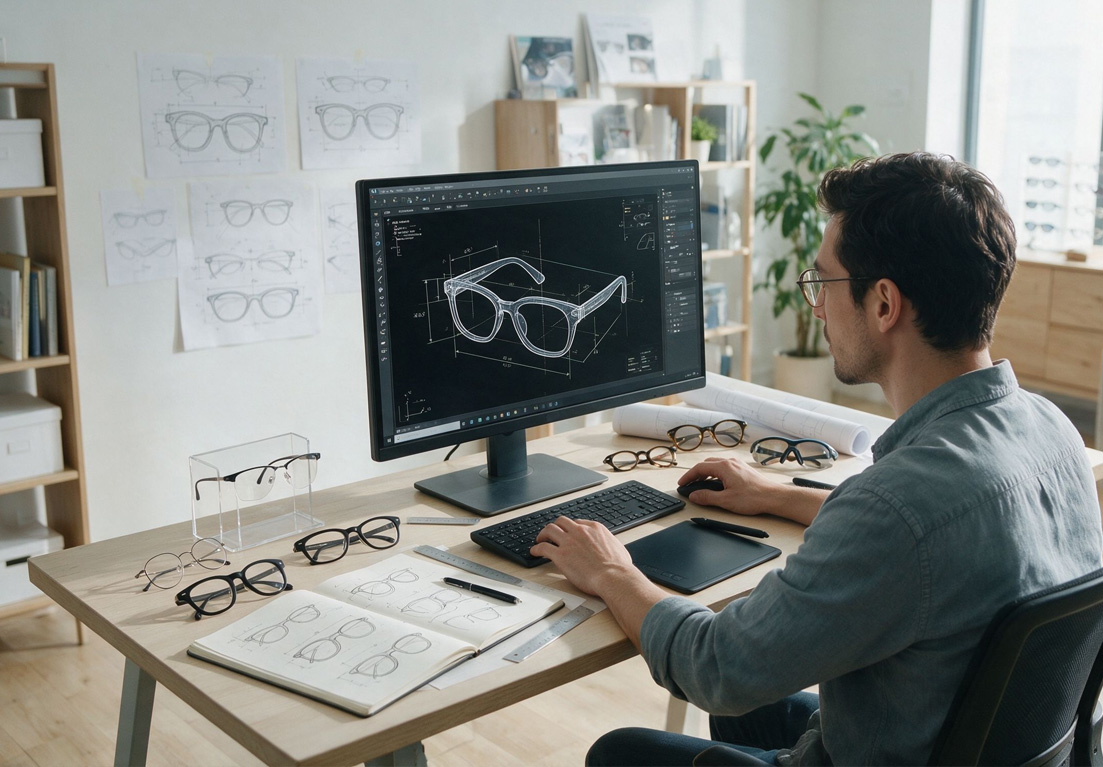
Mistake 4: Relying Solely on CAD Drawings Without Real-World Testing
Many new overseas brand founders mistakenly believe that high-quality CAD drawings and renderings equal qualified finished products. They mass-produce frames directly by checking only drawing parameters, skipping real-user fitting, multi-scenario testing, and data fine-tuning.
A 0.5mm dimensional deviation or slight temple angle error on drawings will cause obvious wearing problems, including temple squeezing, nose bridge pressure, and frame looseness. Most high return rates of new overseas eyewear products result from insufficient pre-production testing.
✅ Solution: Complete sample production after drawing confirmation. Conduct fitting tests on users with different head circumferences and facial shapes under daily commuting, office, and outdoor scenarios. Optimize dimensions and balance based on real test data before mass production.
Mistake 5: Universal Frame Design Ignoring Regional Facial Differences
Eyewear is a highly personalized and regional product. Western and Asian consumers have huge differences in head width, nose bridge height, and facial contours. Many new brands adopt a universal frame design, causing poor regional adaptability.
European-style wide frames easily slip down on Asian faces with lower nose bridges; narrow Asian-style frames squeeze the wider heads of Western consumers. Unilateral design leads to low market adaptation and high cross-border return rates.
✅ Solution: Classify product versions based on target markets. Develop Asian fit and European fit frames by adjusting hinge distance, frame width, temple length, and nose pad height to match local facial features.
Mistake 6: Chasing Ultra-Light Gimmicks While Ignoring Weight Balance
"Ultra-light" is a mainstream marketing gimmick in the global eyewear market. Many new brands blindly reduce frame weight by cutting structural materials, resulting in unbalanced center of gravity. Overly light frames tend to tilt forward, press the nose, or slip easily during wear.
Market verification proves that moderately weighted frames with balanced pressure offer far better comfort than unbalanced ultra-light frames. Chasing lightweight gimmicks at the cost of structural balance is a typical new-brand pitfall.
✅ Solution: Abandon the "lighter is better" misconception. Prioritize overall weight distribution and structural balance to disperse nose and head pressure, matching long-hour wearing needs of global users.
Mistake 7: Blind Function Stacking Away From Real User Pain Points
Many new eyewear brands stack excessive functions and over-upgrade parameters to improve product competitiveness. However, most additional features are impractical for global users. Ordinary daily glasses with redundant coatings or smart glasses with bloated functions all fail in market verification.
Global consumers pursue practicality and comfort rather than fancy parameters. Blind function stacking increases costs without improving core user experience.
✅ Solution: Develop functions based on regional user demands. Office glasses focus on blue-light blocking and anti-fatigue performance; myopia frames focus on high-prescription thinness; daily fashion frames focus on stability and versatility. Remove invalid functions and highlight core advantages.
Mistake 8: Neglecting Fine Craftsmanship and Skin-Friendly Details
Global consumers are extremely sensitive to product details and craftsmanship. Many new brands focus only on frame shape and main materials but ignore skin-contact details, such as rough temple edges, stiff nose pads, uneven polishing, and easy-peeling coatings.
Minor craftsmanship flaws will trigger negative reviews on Amazon, Shopify, and social platforms, seriously damaging overseas brand reputation.
✅ Solution: Formulate strict overseas-level craftsmanship standards. Optimize polishing, welding, and surface finishing for all skin-contact areas to improve wear texture and durability, meeting global high-quality product requirements.
Mistake 9: Mass Production Without Small-Batch Market Testing
Eager to seize global market share, many new brands launch large-batch mass production once samples are finalized, without small-batch trial sales. This risky operation easily causes massive unsold inventory if styles fail to match local market preferences.
Untested mass production magnifies design and quality flaws, leading to huge cross-border after-sales costs and irreversible brand losses.
✅ Solution: Follow the test-optimize-scale up logic. Adopt small-batch trial sales to collect overseas user feedback and sales data, optimize product defects, and expand production gradually to avoid inventory risks.
Mistake 10: Cooperating With Factories Without R&D and Optimization Capabilities
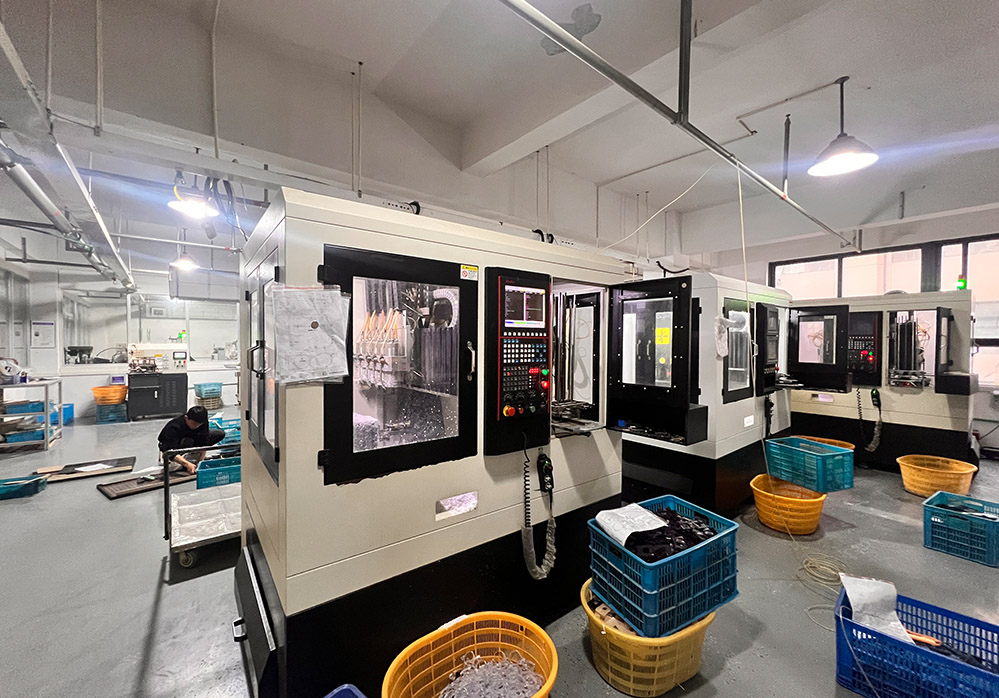
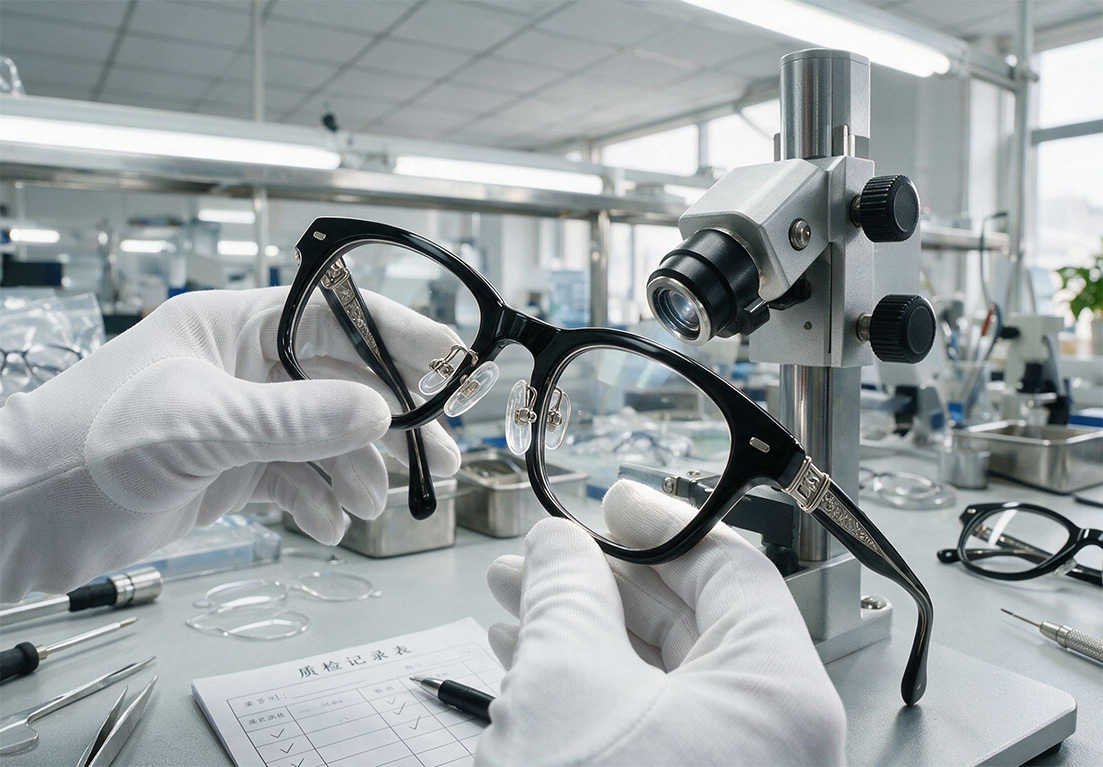
Most new overseas eyewear startups lack independent R&D teams and rely entirely on OEM factories. Ordinary factories only replicate drawings without optimizing ergonomics and market adaptability, resulting in unchanged inherent design flaws in mass products.
Factories without professional R&D and QC systems often have size deviations, simplified craftsmanship, and material cutting corners, causing unstable product quality and declining user reputation.
✅ Solution: Partner with manufacturers with full-chain R&D, testing, and QC capabilities. Verify and optimize designs before production, correct potential structural flaws, and insist on continuous product iteration for global market adaptation.
Conclusion: Details Determine the Long-Term Success of Overseas Eyewear Brands
For new eyewear brands going global, trendy appearance is only a temporary traffic attraction. Ergonomic design, regional facial adaptation, precise craftsmanship, and excellent user experience are the core competitiveness for long-term overseas development.
Most overseas startup brand failures stem from accumulated product development mistakes, not insufficient marketing investment. Avoiding the above 10 pitfalls, focusing on global user pain points, and insisting on iterative optimization enable new eyewear brands to stand out in the fierce global market competition.