Why Some Eyewear Frames Feel Premium (Even Before You Wear Them)
August 23, 2026
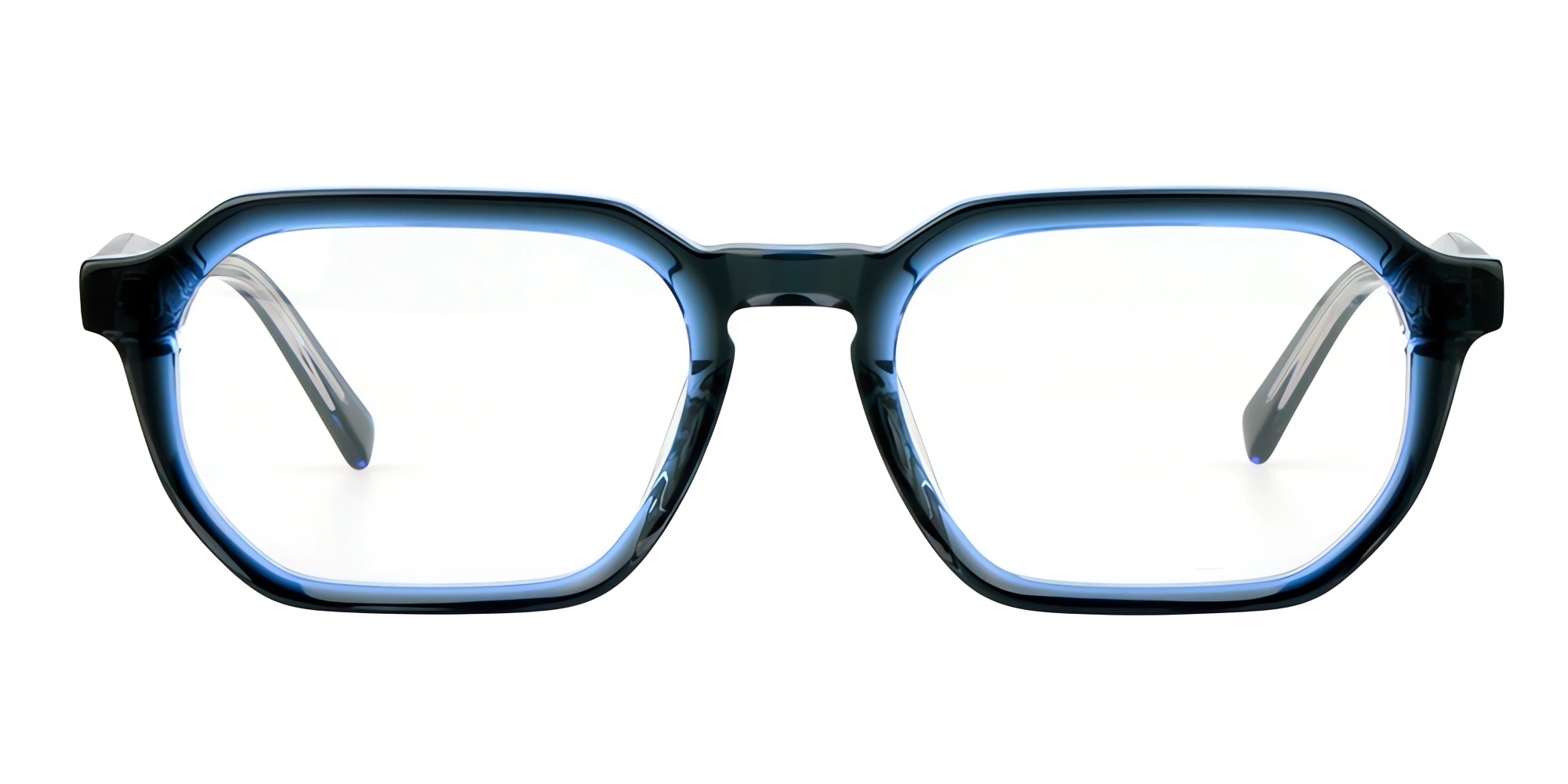
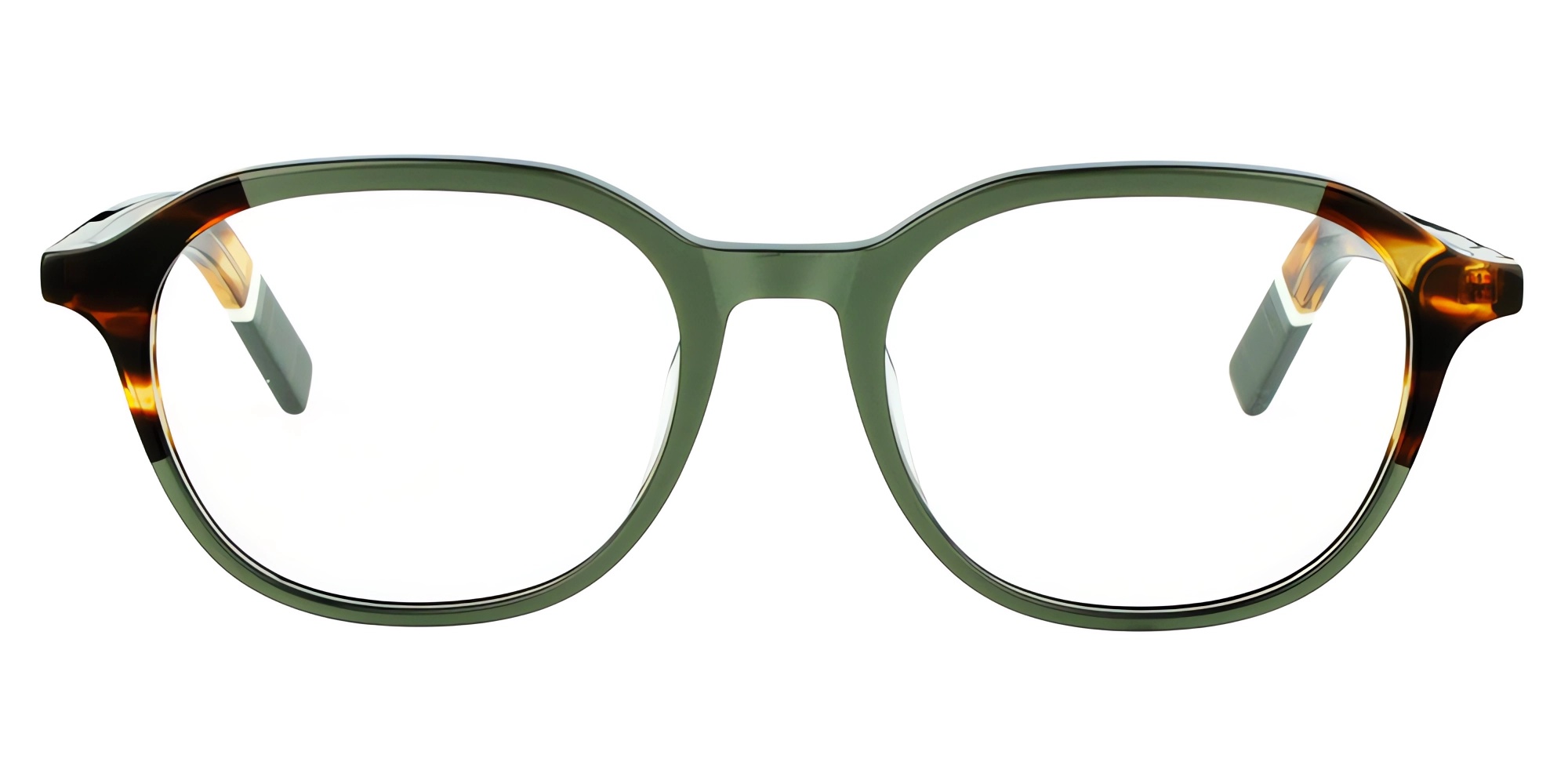
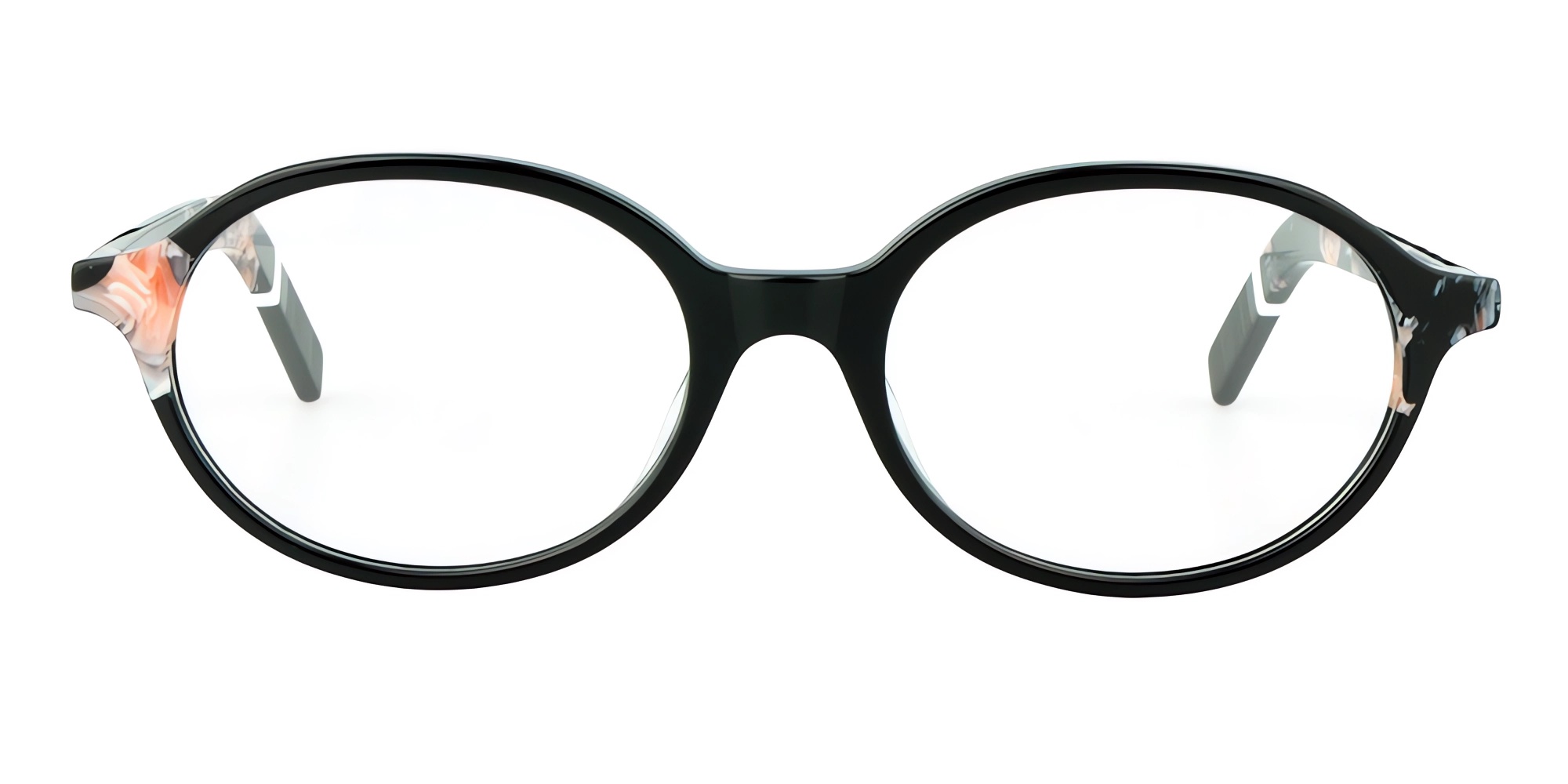
Walk into any optical store, eyewear showroom, or wholesale exhibition, and you will notice an obvious difference: some glasses feel cheap and flimsy at first touch, while others deliver an undeniable premium texture instantly—even before you put them on your face.
Most consumers and even new eyewear buyers mistakenly link premium eyewear quality to high prices, brand logos, or trendy silhouettes. In reality, the luxurious feel of high-end frames has nothing to do with pricing or marketing hype. It comes from five invisible but tangible manufacturing details: polishing, edge finishing, acetate quality, hinge feeling, and plating craftsmanship.
These subtle yet critical details separate mass-produced fast-fashion eyewear from durable, high-value premium frames. As a professional premium eyewear manufacturer focused on refined craftsmanship, Bright Eyewear always prioritizes these five core craft standards over low-cost mass production. In this article, we break down how each factor creates that exclusive luxury touch, helping retailers, brand owners, and eyewear enthusiasts accurately identify truly high-quality frames.
1. Precision Polishing: The Foundation of Luxurious Texture
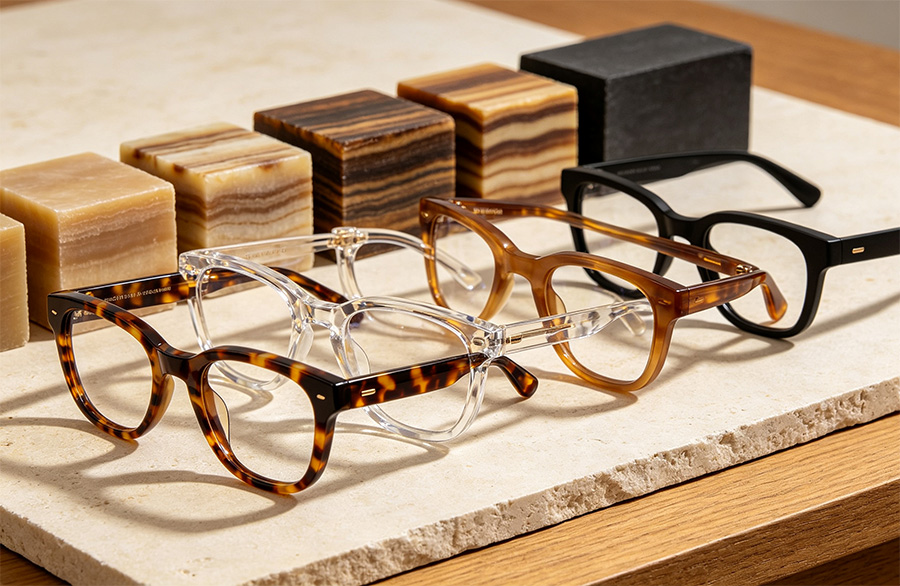
Polishing is the most overlooked but defining step that differentiates premium eyewear from budget alternatives. Low-cost frames usually adopt one-time machine polishing, leaving uneven surfaces, tiny tool marks, dull gloss, and subtle haze under natural light. The surface feels flat and plasticky, lacking the depth of high-end eyewear.
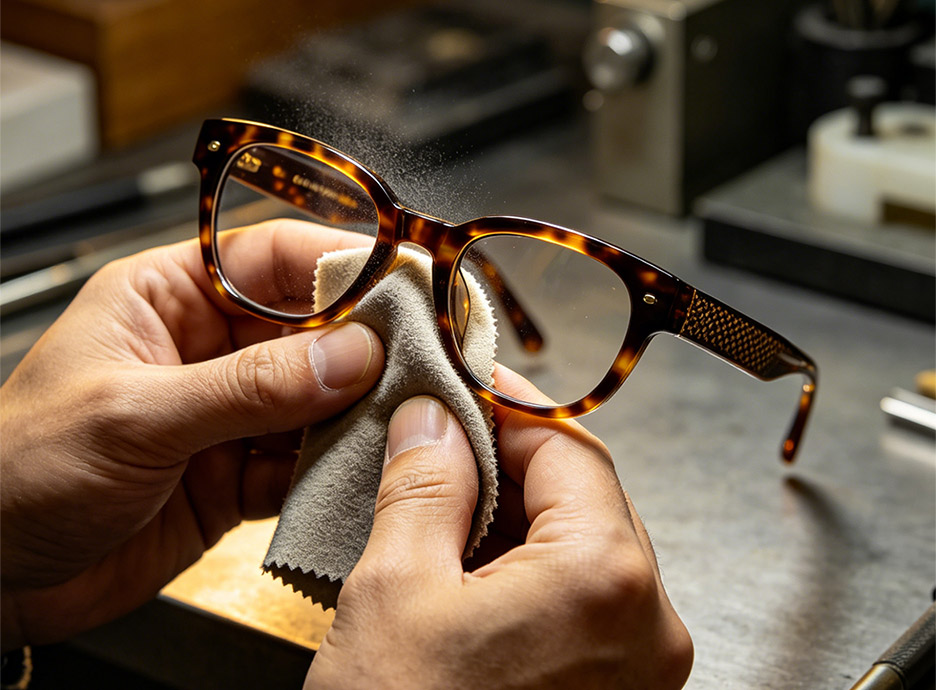
Premium frames undergo multi-stage systematic polishing, including rough grinding, medium smoothing, fine buffing, and final hand polishing. Qualified artisans spend 10 to 30 minutes refining every corner, inner rims, temple arms, and bridge areas of a single frame, eliminating all machining traces and uneven textures. For high-grade acetate frames, Bright Eyewear adopts a strict 96-hour full polishing process with wood-chip tumbling and professional compound buffing to deliver flawless surface luster.
The result is a uniform, deep, and crystal-clear luster. The frame surface reflects light smoothly without distortion, no dull patches, no polishing residue in crevices or hinge gaps. This consistent, silky shine is the first visual and tactile signal of premium quality that customers can perceive at first glance.
2. Meticulous Edge Finishing: No Roughness, Only Refined Smoothness
Edge finishing is the detail that exposes low-quality eyewear most intuitively. Mass-produced budget frames often have sharp, unpolished edges, tiny burrs, uneven cutting traces, and thick mold seams. These rough edges not only ruin the overall texture but also irritate the skin and hair during wear, greatly reducing the user experience.
Premium eyewear focuses on full-edge fine finishing for every detail. Every edge of the frame front, lens holes, temple tips, and bridge curves is manually rounded and smoothed. There are no sharp corners, no uneven cutting marks, and no residual burrs. Bright Eyewear strictly implements full-edge manual finishing standards for all premium frames, ensuring a consistent soft and smooth texture whether you slide your fingers along the frame edges or touch the inner rim against the skin.
This refined edge treatment is not only for visual aesthetics but also reflects rigorous quality control standards. It eliminates potential wearing discomfort and ensures long-term durability, which is a core feature of commercial-grade premium frames.
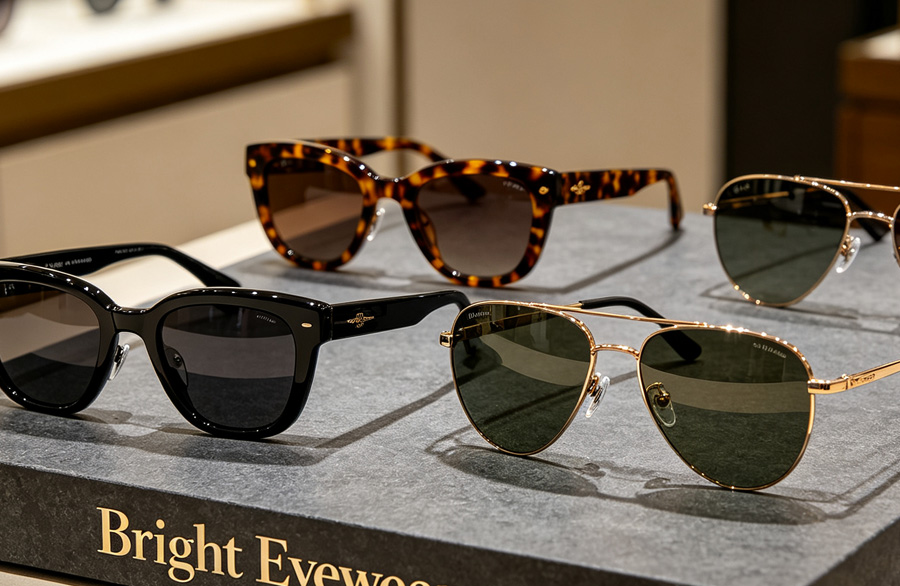
3. High-Grade Acetate Quality: Inherent Depth Beyond Surface Appearance
Many people confuse thick plastic frames with premium acetate frames. In fact, ordinary injection-molded plastic is single-layer, easy to fade, crack, and turn yellow, with a flat, shallow texture. True premium frames adopt high-density plant-based cellulose acetate, the core material of luxury eyewear.
High-quality acetate features layered internal texture, pure color saturation, and stable molecular structure. Unlike painted plastic surfaces that wear off easily, the pigment of premium acetate runs through the entire material, so the color and pattern remain intact even after long-term wear and minor scratches. With a density of 1.32 g/cm³, it delivers solid structural integrity without being bulky.Bright Eyewear exclusively selects imported high-density plant-based acetate materials for all premium series, ensuring proper flexibility and toughness to resist daily extrusion and impact damage.
Cheap acetate or plastic frames feel hollow and rigid, while premium acetate frames present a solid, moist, and textured touch. The natural layering and subtle color gradient bring a unique vintage and high-end sense that synthetic plastic can never replicate.
4. Delicate Hinge Feeling: The Hidden Standard of Craftsmanship
The hinge is the most active mechanical part of eyewear and the best touchstone for testing manufacturing precision. Budget eyewear usually uses low-grade iron hinges or plastic rivet hinges, which feel loose, stiff, or wobbly when opening and closing. They produce harsh friction noise, have poor ductility, and easily loosen or break after frequent use.
Premium eyewear adopts precision-machined stainless steel or titanium hinges with strict assembly calibration. Every opening and closing action delivers a stable, tight, and silky feedback—no lag, no shaking, no abnormal noise. Bright Eyewear optimizes hinge structure for all premium models, equipping high-end styles with upgraded spring-loaded hinges, providing 30% more flex tolerance to adapt to different head shapes while maintaining stable long-term resilience.
The premium hinge feeling lies in uniform damping and precise fit. Every fold is smooth and orderly, which is an invisible luxury detail that greatly improves the product grade and user experience.
5. High-Precision Plating: Durable Luster Without Cheap Fading
Metal parts such as hinges, screws, and frame lines rely on plating technology to determine their grade. Low-cost electroplating is thin, uneven, and prone to color fading, oxidation, and blistering after short-term use, making the frames look old and cheap quickly.
Premium eyewear adopts multi-layer vacuum electroplating and brushed plating technology. The plating layer is uniform, dense, and highly adhesive, with a delicate matte or metallic luster. It effectively resists daily sweat, oil, and oxidation, avoiding fading, peeling, and rusting problems. Bright Eyewear adheres to high-standard vacuum plating processes for all metal components, ensuring long-lasting color stability and premium metallic texture.
Whether it is classic gunmetal, brushed silver, soft gold, or rose gold, high-quality plating presents natural and low-key color rendering, without the gaudy, flashy tone of cheap color electroplating. The long-lasting metallic texture ensures the frames maintain a new-like premium look for years.
Conclusion: Premium Feeling Comes From Details, Not Prices
To sum up, the premium sense of eyewear frames is never determined by retail prices, brand premiums, or trendy designs. It is shaped by five core craft details: standardized precision polishing, full fine edge finishing, high-density pure acetate material, stable and silky hinge feedback, and durable high-grade plating.
For eyewear buyers, retailers, and brand designers, abandoning the misconception of "expensive equals good" and focusing on these five craft dimensions is the key to selecting high-conversion, low-return, long-lifecycle premium eyewear. Real luxury eyewear delivers refined texture and reliable quality in every subtle detail. Adhering to craftsmanship-oriented philosophy, Bright Eyewear proves that premium eyewear value comes from rigorous manufacturing standards rather than inflated pricing, allowing customers to feel the premium value at the first touch.