Why Some Eyewear Frames Feel Comfortable — and Others Don't
July 13, 2026
Everyone talks about beautiful eyewear.
Far fewer people talk about comfortable eyewear.
Yet ask any optical retailer why customers return a frame, and you'll hear the same answers again and again:
"It pinches my head."
"It keeps sliding down."
"It feels heavy after an hour."
"The nose bridge hurts."
Most of these complaints have very little to do with materials or price.
They're usually the result of engineering decisions that were made months before the frame ever reached the customer.
Comfort isn't something that happens at the end of production. It starts on the designer's screen.
Comfort Is Never Just One Dimension
Many new eyewear brands assume comfort comes from making a frame lighter.
Weight certainly matters—but it's only one piece of a much larger puzzle.
A truly comfortable frame is the result of dozens of small engineering decisions working together:
Head width
Temple geometry
Nose support
Weight distribution
Material flexibility
Balance
Ergonomics
Miss one of these, and even an expensive frame can become uncomfortable.
The Hinge Distance: The Invisible Number That Determines Whether a Frame Pinches
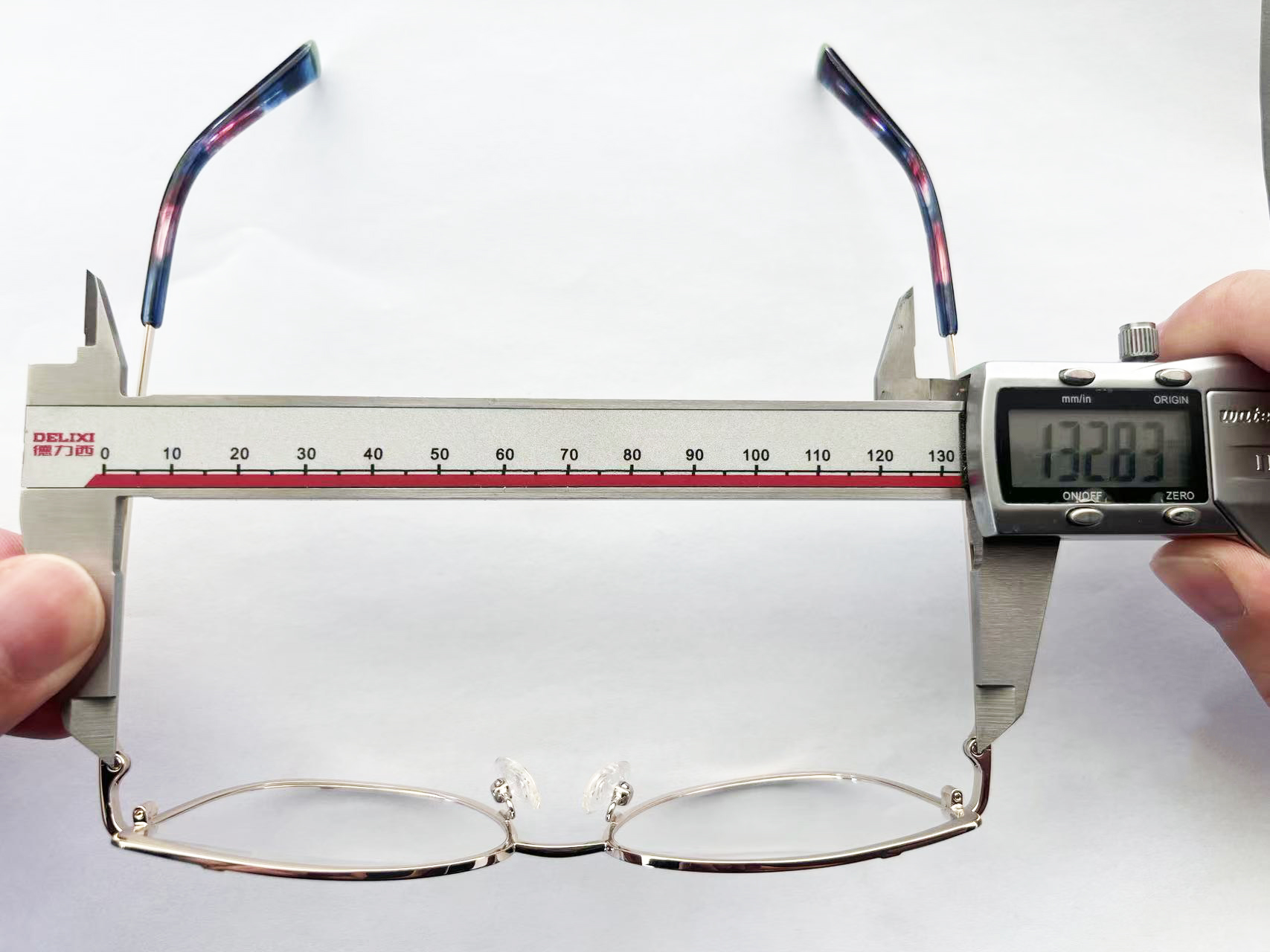
One measurement is surprisingly important but rarely discussed outside the factory:
The distance between the two hinges.
This dimension largely determines how much pressure a frame applies to the sides of the head.
Too narrow, and the temples squeeze the wearer's face.
Too wide, and the frame lacks stability.
This isn't something that can simply be adjusted after production—it needs to be considered during the design stage.
That's why experienced product developers don't start by asking, "What shape do we want?"
They first ask:
Who is this frame designed for?
A narrow-face collection?
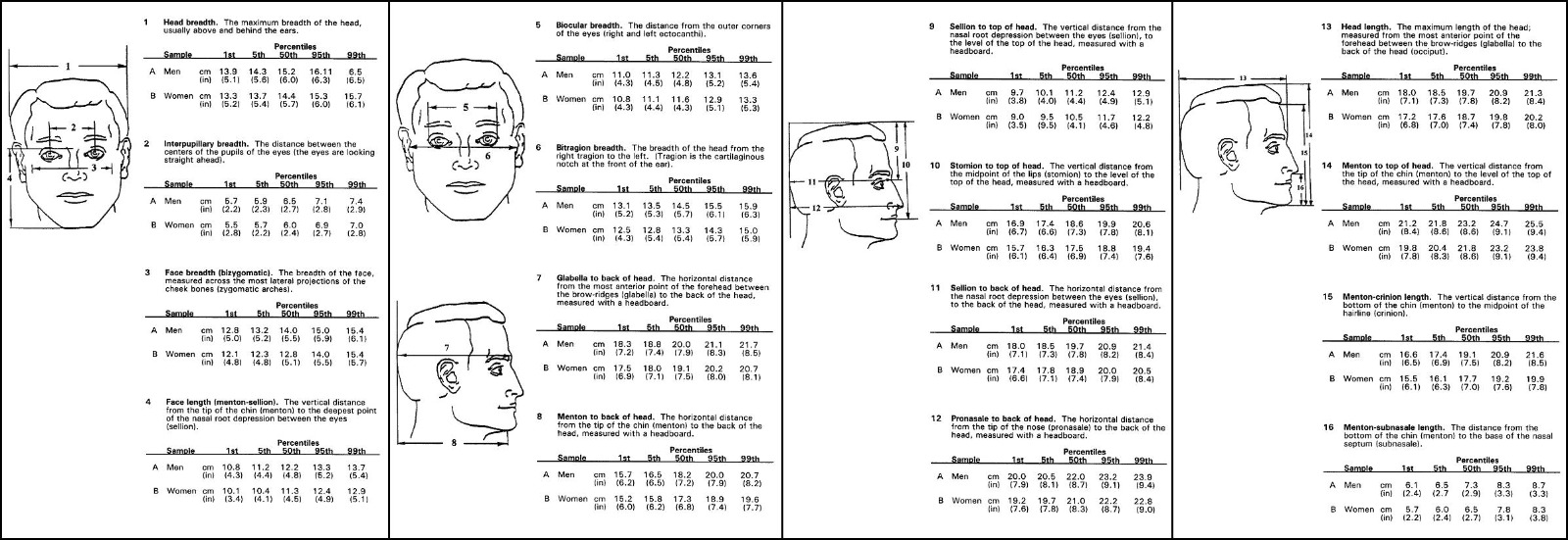
A wider European fit?
An Asian fit?
A unisex market?
Once the target wearer is defined, designers can fine-tune the hinge distance by adjusting:
Lens Width
Bridge Width
Overall Front Geometry
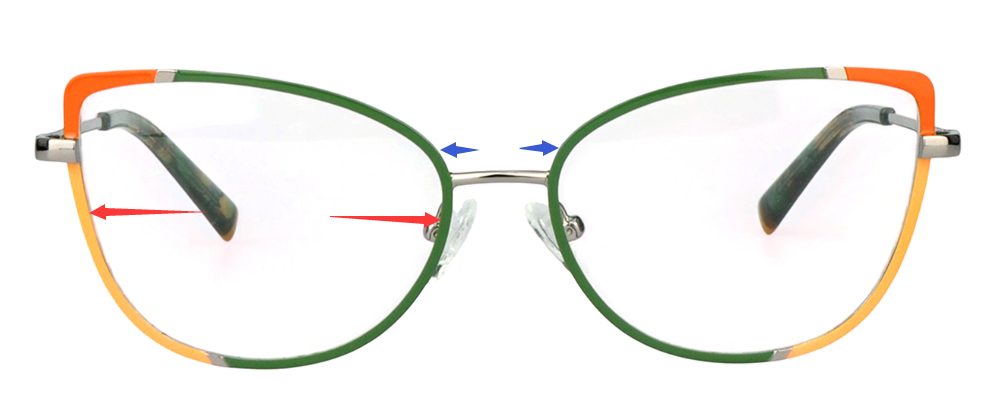
These dimensions work together to create a natural fit.
If additional flexibility is needed, spring hinges can further reduce side pressure by allowing the temples to open beyond their normal angle. While they don't replace proper sizing, they can make a well-designed frame even more forgiving during everyday wear.
Temple Length Doesn't Just Reach the Ear—It Secures the Entire Frame
Another overlooked factor is temple length.
Many people assume the temple simply needs to be "long enough."
In reality, it's much more nuanced.
A properly designed temple should extend comfortably behind the ear, allowing the frame to sit securely without creating excessive downward pressure.
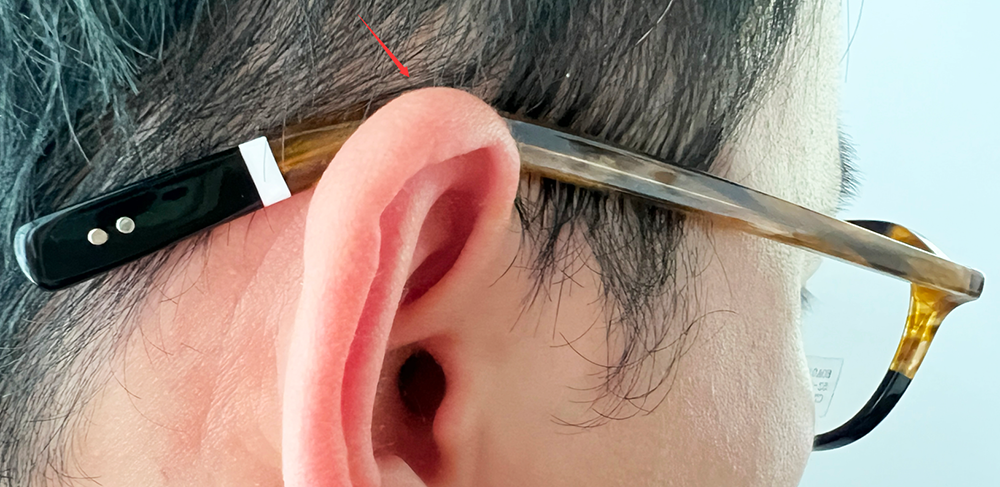
If the temple is too short, the frame may feel unstable and slide forward.
If it's too long, the fit becomes loose and less controlled.
Just as important is the distance between the temple tips when the frame is fully opened.
This opening determines how firmly the temples wrap around the head.
Too narrow, and the frame feels tight.
Too wide, and it lacks grip.
The best-fitting eyewear doesn't squeeze the wearer—it gently embraces the head.
That's a subtle difference, but one customers notice immediately.
Nose Support: Small Parts, Big Difference
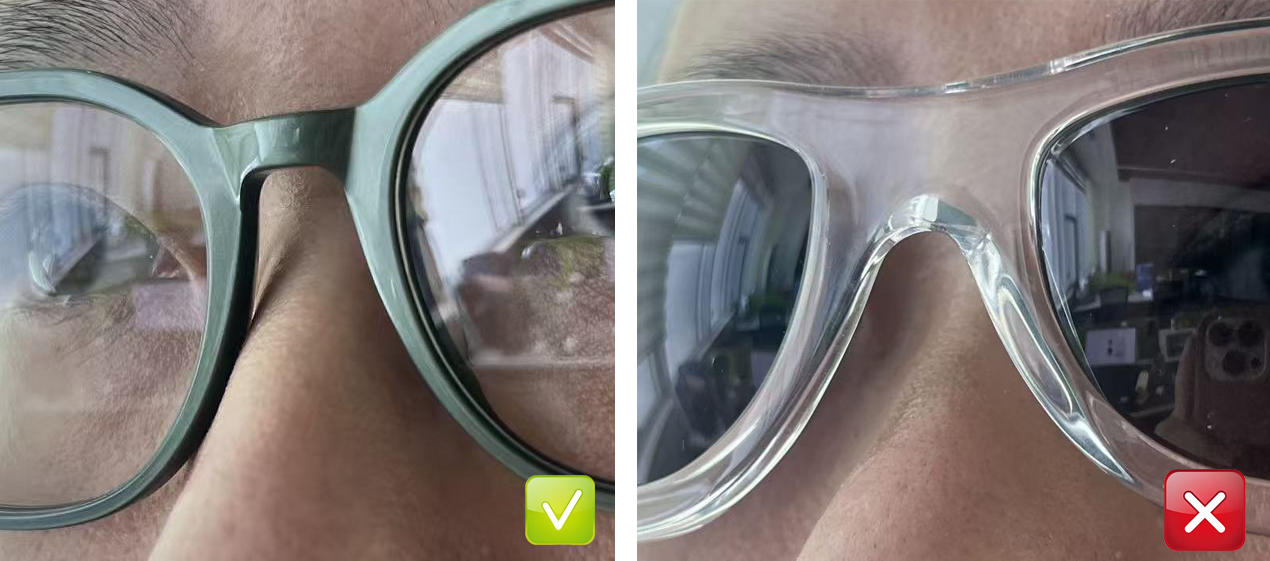
The nose carries most of the frame's weight.
That's why nose support deserves far more attention than it often receives.
Several factors influence comfort:
Nose pad shape
Nose pad width
Contact surface
Material
Angle
Metal frames usually offer adjustable nose pads, allowing opticians to fine-tune the fit for different facial structures.
Acetate and injection frames rely on molded nose bridges, making the original engineering even more critical.
A well-designed nose fit distributes pressure evenly across the bridge instead of concentrating it on a single point.
When done correctly, customers almost forget the frame is there.
Weight Matters—But So Does Balance
Consumers often ask for lightweight eyewear.
However, "lighter" doesn't automatically mean "more comfortable."
A frame with poor balance can feel heavier than a slightly heavier frame with excellent weight distribution.
Interestingly, comfort preferences also vary across different markets.
In many Asian countries, consumers generally prefer ultra-lightweight eyewear that minimizes pressure on the nose.
In parts of Europe, however, many wearers appreciate a frame with a little more substance. A slightly heavier frame can create a reassuring sense of stability and premium quality.
Neither preference is right or wrong.
The key is understanding who you're designing for.
A successful product isn't the lightest one—it's the one that matches the expectations of its target market.
Comfort Also Comes From the Details
Beyond the major dimensions, countless smaller factors influence how a frame feels throughout the day.
These include:
The curvature of the temples
The pantoscopic angle
Front frame balance
Lens weight
Material flexibility
Hinge resistance
Surface finishing around areas that contact the skin
Individually, these details may seem insignificant.
Together, they define the wearing experience.
Customers rarely notice good engineering—but they notice poor engineering immediately.
Great Comfort Is Built Through Experience, Not Guesswork
One of the biggest misconceptions in product development is believing that a beautiful CAD drawing automatically becomes a comfortable product.
In reality, every new frame is a hypothesis.
It needs to be tested, evaluated, adjusted, and refined.
That's why experienced manufacturers often suggest subtle changes during development:
widening a bridge by half a millimeter
extending a temple by a few millimeters
reshaping a nose bridge
adjusting hinge placement
optimizing weight distribution
These small refinements may seem insignificant on paper, but they often determine whether a customer wears the frame every day—or leaves it in a drawer.
Why Choosing the Right Development Partner Matters
Many factories simply manufacture exactly what appears on the technical drawing.
At Bright Eyewear, we believe our role begins much earlier.
With decades of experience in eyewear engineering and OEM/ODM development, we work alongside brands to review designs before production starts. When we identify potential comfort issues, structural risks, or opportunities for improvement, we share our recommendations openly.
Sometimes a change of just 0.5 mm can dramatically improve how a frame feels.
Those small adjustments are difficult to spot on a drawing—but they make a real difference once the frame is worn.
For us, manufacturing isn't just about making parts. It's about helping brands create eyewear that people genuinely enjoy wearing.
Final Thoughts
Comfort is never the result of a single feature.
It comes from the careful balance of dimensions, ergonomics, engineering, and experience.
The most comfortable frames are rarely created by accident—they are refined through countless small decisions made by people who understand how eyewear behaves on the human face.
If you're developing a new eyewear collection, don't wait until the first samples arrive to discover comfort issues.
Let's discuss them while they're still lines on a drawing.
Our engineering team is always happy to review your designs, share practical suggestions, and help you build frames that not only look exceptional—but feel exceptional too.