Eyewear Repair and Adjustment Services: Adding Value and Driving Customer Loyalty
October 04, 2026
Eyewear is sold once, but it is worn every day — and worn every day means needing service. Hinges loosen, nose pads wear, temples lose their fit, lenses collect scratches and oils. In most retail categories, that would be a problem. In eyewear, it is an opportunity: every service visit is a reason for the customer to come back, and every service experience well delivered is a reason to stay.
This article breaks down why repair and adjustment services are not a cost center but a value center — how they drive customer loyalty, how they work as a competitive weapon against e-commerce, and what brands and manufacturers should do to build serviceability into their products.

Why Service Is the Hidden Center of Eyewear Retail
A pair of glasses is the most personal, most worn, most physically demanding accessory a customer owns. It sits on the face for years, is handled constantly, and needs to fit perfectly or it is not comfortable enough to wear. That combination makes eyewear a relationship category: the purchase is the beginning of the relationship, and every adjustment and repair is a touchpoint that keeps it alive.
The economics follow the relationship. A customer who only buys once is worth one transaction. A customer who returns for adjustments, then for replacement nose pads, then for a second frame, then for an upgrade — is worth a lifetime of transactions. The retailer or brand that owns the service relationship owns the next sale. The one that does not leaves the customer free for any competitor, online or offline.
Service also solves the problem every eyewear business faces: what happens after the sale. Without a service relationship, a frame that loosens after a year is a reason for the customer to shop elsewhere. With one, it is a reason to walk back through the door.
How Service Creates Value — at Every Level
Adjustment: The Lowest-Cost Trust Builder
The most basic service is also the most powerful: fitting and adjustment. A frame that sits correctly — not too tight, not too loose, balanced on the nose, temples aligned — is the difference between a customer who loves their glasses and one who quietly stops wearing them.
Free adjustment is the lowest-cost trust builder in retail. It costs minutes and a few parts. It signals that the store stands behind what it sells. And it creates the habit of returning: customers who come in for a quick adjustment are customers who will come in for the next purchase. Every adjustment visit is also a chance to notice — loose screws, worn nose pads, coating damage — and offer a solution before the problem becomes a lost customer.
Repair: From Cost Center to Profit Center
Repair services convert problems into revenue. The classic repair menu is small but dependable:
Hinge repair and replacement — the most common failure, and the most common reason a frame is abandoned;
Nose pad replacement — fast, cheap, and a recurring need;
Temple replacement and reattachment — including broken hinges and cracked acetates;
Screw replacement and re-tightening — the tiny fix that prevents bigger failures;
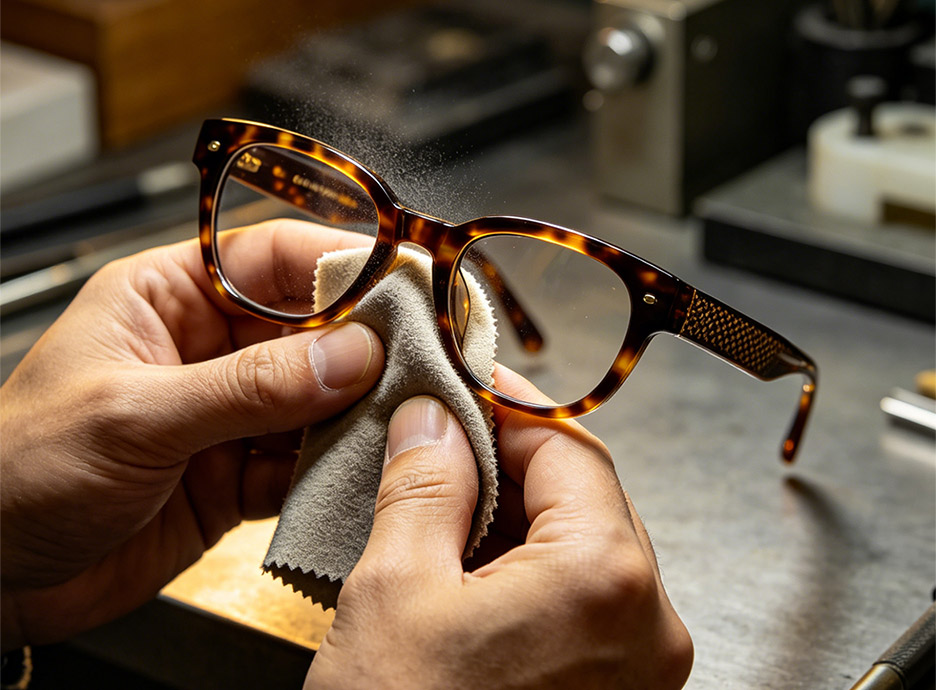
Frame cleaning, polishing, and re-finishing — restoring a well-loved frame to near-new condition;
Lens edge polishing and de-scratching — where serviceable.
Each repair has two revenue streams: the direct service fee, and the parts and accessories that the service visit naturally generates — a cleaning kit, a replacement case, a spare frame. Repair visits are also the highest-intent visits a store gets: the customer is already in the door, already spending, and already loyal enough to repair rather than replace.
Deep Service: The "Health Check" That Builds Lifetime Habits
Beyond fixes, structured service builds habits. A deep-service program — ultrasonic cleaning, full screw check, hinge lubrication, coating inspection, fit re-verification — is the optical equivalent of a health check. Offered as a free annual service, or included in a care plan, it gives the customer a scheduled reason to return and gives the store a scheduled opportunity to sell.
This is where service becomes a marketing asset: "lifetime adjustment," "repair, don't replace," "free annual check-up." These are messages that differentiate a store or a brand in a market where most competitors sell frames and forget the customer.
The Financial Logic: Why Service Pays for Itself
Service looks like a cost line until the full picture is counted. The complete value stack includes:
Direct revenue — paid repairs and service plans;
Indirect revenue — the parts, accessories, cases, and second frames that service visits generate;
Loyalty economics — a service-satisfied customer returns for the next frame, and returning customers are reliably cheaper to keep than new ones to acquire;
Referral economics — a customer who gets a problem solved talks about it; great service is one of the most credible marketing channels in retail;
Competitive moat — e-commerce cannot adjust a hinge, replace a nose pad, or re-fit a temple. Physical service is the one thing online channels cannot copy, and it is the strongest argument for buying from a store that offers it.
The service desk is, in effect, a profit center wearing a cost-center costume. The stores that count the whole stack — not just the service fee — are the ones that staff it properly and use it as a weapon.
The Manufacturer's Role: Design for Serviceability
The quality of the service relationship depends on something the retailer cannot control: whether the frame is serviceable at all. This is where manufacturers and brands must align, and where manufacturing choices become loyalty decisions.
Standardized parts. A hinge that is a common standard, a nose pad that is replaceable with a universal part, screws that fit standard tools — these are what make repairs fast, cheap, and possible in any market. Proprietary parts and non-standard hardware quietly kill serviceability.
Spare parts availability. A frame may sell for years, but repair demand continues long after production stops. The factory should keep hinge sets, nose pad sets, screws, and temple blanks in stock for years after a frame leaves the catalog — a disappearing spare part is a permanent lost customer.
Repairable construction. Designs that allow a broken temple to be replaced rather than discarding the whole frame, hinges that can be rebuilt, acetates that can be polished and re-finished — repairable construction turns a $30 repair into a $300 retained customer.
Service tools and training. The best frames in the world are only as serviceable as the people servicing them. Manufacturers that provide repair kits, service guides, and training to their retail partners turn a product line into a service program.
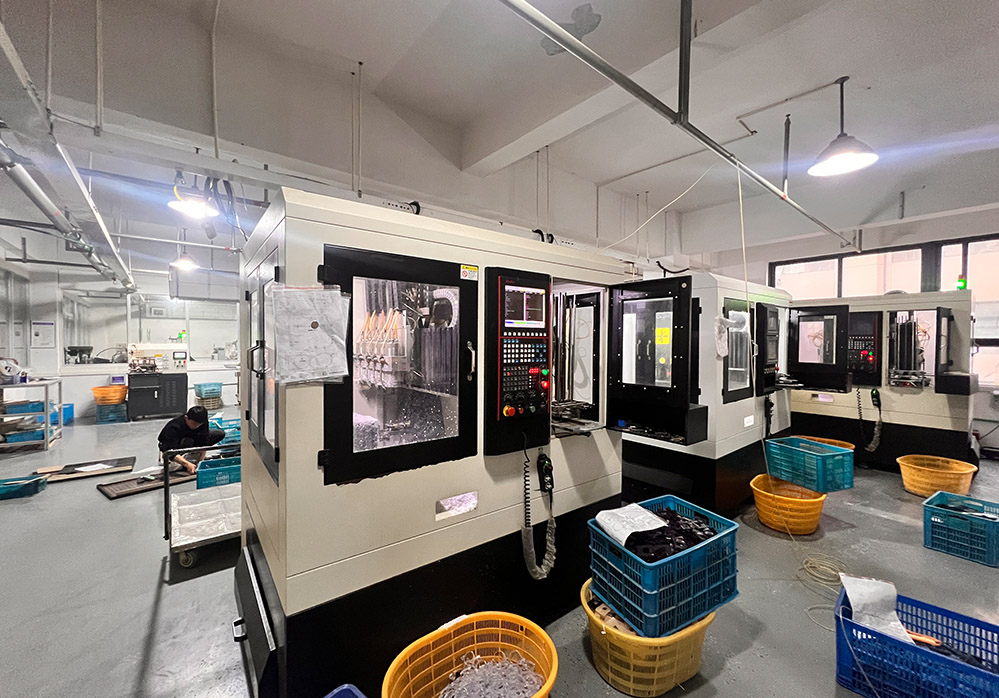
As a professional eyewear factory with over 18 years of manufacturing experience, we build serviceability into every frame we make: standard hinge systems and replaceable nose pads, spare parts kept in stock for years after a model ends, repairable constructions designed to be repaired rather than replaced, and the tooling and documentation to support our customers' service desks. We treat repair and adjustment not as an afterthought of manufacturing, but as part of the product itself.
How to Build a Service Capability That Drives Loyalty
Whether you are a retailer building a service desk or a brand supporting your retailers, the same framework applies:
Step 1 — Start with the basics. An adjustment station, a heat gun for acetates, a screwdriver set, nose pad stock, and a cleaning station. Most service value comes from the smallest actions.
Step 2 — Define the free services. Decide what is free (fitting, adjustments, screw checks) and what is paid (replacement parts, deep service, refinishing). Free adjustment is not a cost; it is the lowest-priced loyalty program in retail.
Step 3 — Set service standards. Repair turnaround times, warranty coverage, and spare part availability should be written down, not improvised. Customers trust a store that can tell them exactly when their frame will be ready.
Step 4 — Turn service into data. Keep a service record per customer: what was adjusted, what was replaced, what was recommended. The record is the basis of proactive outreach — "your nose pads are due for replacement" — and the basis of the next sale.
Step 5 — Use service as a marketing asset. "Lifetime adjustment," "repair instead of replace," "free annual check-up." In a market saturated with identical products, service is the message competitors cannot copy.
Conclusion: Eyewear Is a Relationship Business, and Service Is the Relationship
A pair of glasses is never finished selling when it leaves the counter. It needs adjustment, it wears, it breaks, it gets replaced — and every one of those moments is a decision point: return to the same store, or go somewhere else. Repair and adjustment services decide which way the customer goes. They add value on every visit, turn a cost center into a profit center, build a loyalty moat that e-commerce cannot cross, and — when the product is designed for serviceability — become part of the product itself. The retailers and brands that treat service as a strategy, not an expense, are the ones whose customers keep coming back.