Supply Chain Transparency in Eyewear Manufacturing: What Modern B2B Buyers Expect
November 12, 2026
Once, most B2B eyewear buyers focused mainly on price, minimum order quantity, lead time and sample quality. Today, transparency across the full supply chain has moved from a marketing bonus to a non-negotiable requirement. Brands, optical retailers and importers are asking eyewear manufacturers to prove where every component comes from, how workers are treated, what materials are used, and whether production meets global environmental and compliance rules.
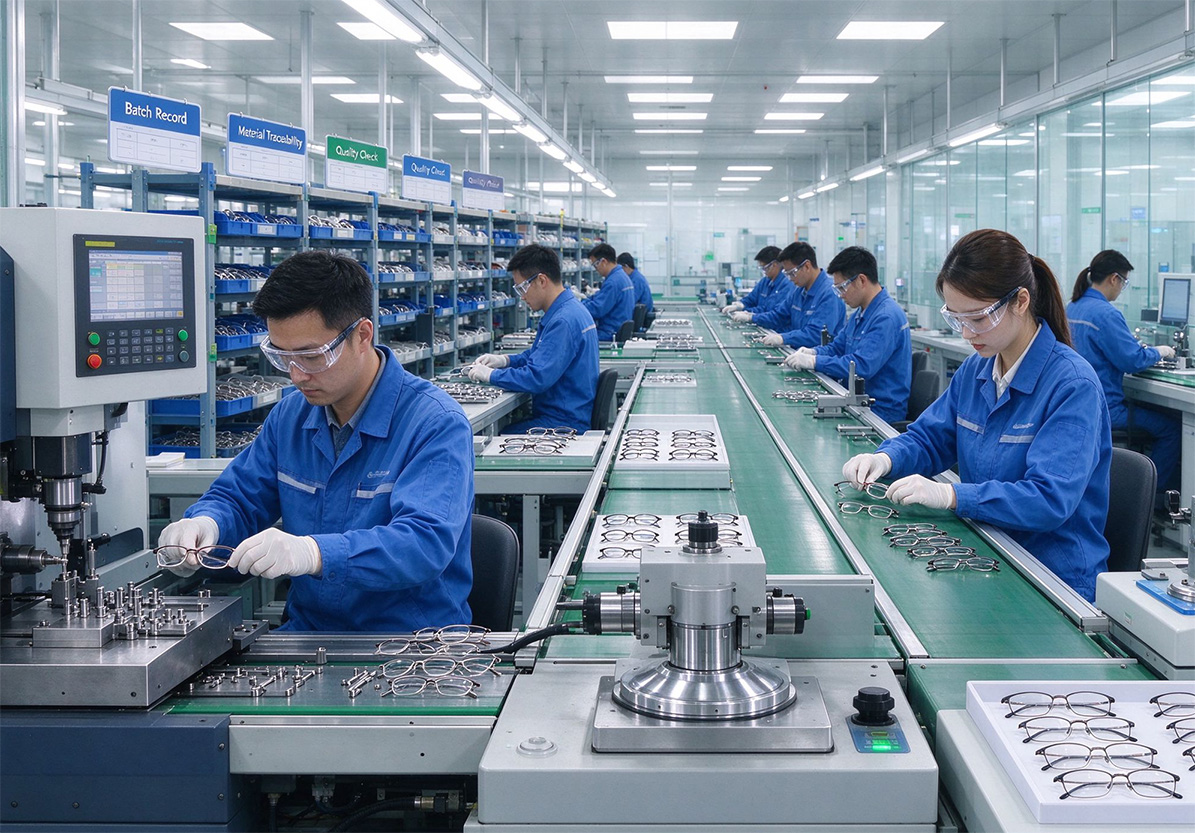
For eyewear, the supply chain is surprisingly complex. A single pair of glasses can involve acetate, stainless steel, titanium, hinges, screws, coatings, lenses, packaging and printing. Raw materials may cross several countries before reaching a finishing factory. Without clear traceability, brands face reputational risk, customs delays, product recalls and rejection by major retail platforms.
Modern B2B buyers expect four core layers of transparency from eyewear suppliers: material traceability, ethical labour compliance, environmental accountability, and verifiable documentation.
Material traceability tops the list. Buyers no longer accept vague statements such as “high-quality acetate” or “imported titanium”. Serious partners want batch records, material certificates, test reports and supplier declarations. For sensitive categories including bio-acetate, recycled plastic and low-nickel metal frames, they require proof that materials match the claimed standard. Many buyers also ask for restricted substance testing, covering heavy metals, phthalates and other chemicals regulated by REACH, California Prop 65 and FDA optical safety standards.
Labour transparency is equally critical. B2B eyewear purchasers expect factories to provide audit records covering working hours, wages, safety equipment, child-labour prevention and anti-discrimination policies. Third-party social audits such as BSCI, Sedex and SA8000 are increasingly requested. Buyers are not only checking for violations; they want suppliers who can show continuous improvement, not just a one-time pass before an audit.
Environmental expectations keep rising. Responsible eyewear brands look for evidence of waste management, water treatment, energy reduction and proper disposal of chemical residues from polishing, plating and painting. Factories that can track carbon footprints, use recycled feedstock or reduce single-use packaging gain a strong competitive edge. For premium and sustainable eyewear lines, buyers often prioritise suppliers with ISO 14001, carbon declarations and closed-loop production plans.
Finally, buyers demand accessible, consistent documentation. Transparency fails if records are scattered, outdated or available only upon special request. Leading eyewear suppliers organise traceability data by order, batch and component, and can share certificates, test reports and audit summaries digitally. Many large buyers also reserve the right to carry out announced or unannounced factory visits.
What does this mean for eyewear manufacturers? Transparency is no longer only about avoiding risk. It is a sales differentiator. Factories that build traceable, auditable and shareable supply chain systems win long-term contracts with international optical brands, private-label retailers and sustainable fashion buyers. Those that cannot provide clear evidence will gradually be excluded from major sourcing programmes.
For B2B buyers, the goal is simple: they want to sell eyewear with confidence. When the supply chain is transparent, brands can tell honest stories to consumers, reduce recall risk, satisfy platform requirements and build trust across their whole distribution network.
The eyewear industry is shifting toward full supply chain visibility. Manufacturers that embed transparency into every purchasing, production and shipping step will be the preferred partners for the next generation of global B2B eyewear buyers.