Why Your Eyewear Supplier Should Be Part of Your Design Team
September 20, 2026
For decades, the eyewear industry worked with a simple division of labor: the brand's design team draws the frames, and the factory manufactures them. The factory is told what to make, and it makes it. This model worked — until it quietly stopped working, because its costs were never visible on any invoice.
Unmanufacturable designs, structural flaws discovered after tooling, materials that miss the brand's intent, costs that only surface at the quotation stage. Every one of these is a symptom of the same thing: a supplier that was treated as a manufacturer instead of what it should be.
A growing number of brands have made the shift. They now operate with a different equation: Factory ≠ Manufacturer. Factory = Product Development Partner. The best eyewear is not drawn first and made later — it is grown together, with engineering, structure, cost, and material decisions made alongside the design itself. Here is why that shift matters, and what it changes.

1. The Old Model: Draw It, Send It, Hope It Works
In the traditional model, the design handoff is a one-way street. The brand sends drawings or 3D files, the factory quotes them, and production begins. The problems in this model are systematic:
Manufacturability risk. A design can look perfect in rendering and be nearly impossible to produce well: wall thicknesses that cause warping, hinge placements that create stress points, decorative details that multiply scrap rates.
Structural blind spots. Without engineering review, load-bearing details — the bridge, the hinge zone, the temple core — are designed by eye. The frame may pass the first impression and fail the 500th opening.
Cost discovered too late. The first reliable cost figure arrives at the quotation, after the design is already committed. By then, the most expensive cost-reduction levers are gone.
Material mismatch. A color, weight, or finish imagined on screen may not exist — or may not behave as expected — in the real acetate, titanium, or stainless steel.
None of these failures shows up as "design error" on any document. They show up as re-sampling rounds, remake batches, and launched products that underperform. The old model did not eliminate these costs; it just made them invisible.
2. Factory ≠ Manufacturer: A Shift in Positioning
What is the difference? A manufacturer is production capacity: machines, labor, and the ability to produce what it is told to produce. A product development partner is all of that, plus something the drawings cannot carry: engineering judgment, material knowledge, process experience, and a database of past failures.
Eyewear is a particularly multidisciplinary product. A single frame brings together material science (acetate, titanium, stainless steel, TR90), structural mechanics (hinges, bridges, thin walls), surface engineering (plating, PVD, finishing), and optical assembly (lens edging, mounting). No brand's design team can hold all of that expertise in-house — and no brand needs to, if the supplier brings it to the table.
The shift in positioning changes the timeline as well. When the supplier is a partner, it is consulted at the concept stage, not after the design is frozen. That is the difference between catching a problem in the sketch and catching it after the mold.
3. The Four Ways a Development Partner Adds Value
3.1 Engineering: Making Your Design Manufacturable
Engineering in eyewear means Design for Manufacturability (DFM) — translating a sketch into a frame that can be produced consistently at scale. A development partner reviews the design through the lens of production reality:
Wall thickness and material flow: acetate that is too thin in one zone and too thick in another warps, sinks, or shows stress marks after molding;
Stress concentration: sharp internal corners concentrate load and become the first cracks in a dropped frame;
Hinge integration: the joint geometry determines whether the hinge seats securely, aligns correctly, and survives thousands of openings;
Rimless and semi-rimless geometry: drilling and mounting zones must respect the material's edge distance, or the lens mounting becomes a structural weak point.
Engineering input does not limit design. It protects it — by making sure the design that ships is the design that was intended.
3.2 Structural Suggestions: Fixing Problems Before the Mold
The most valuable structural advice arrives before any tooling is cut. A development partner brings a memory of hundreds of past projects: the bridge that deformed, the hinge that loosened, the temple that flexed wrong. Applied to a new design, that memory becomes specific suggestions:
A thicker bridge profile where the frame width and lens weight demand it;
A redesigned hinge zone that spreads stress instead of concentrating it;
A temple core or wire core placement that balances weight and grip;
Reinforcement at the endpiece where plier adjustment stresses the metal.
None of these suggestions is glamorous. All of them prevent the two most expensive events in eyewear production: a mold that needs rework, and a batch that needs remaking. Structural suggestions are the cheapest quality control in the industry — because they happen before anything exists to fail.
3.3 Cost Optimization: Designing to the Right Price
Industry consensus holds that roughly 70–80% of a product's manufacturing cost is locked in at the design stage. Once the drawing is final, the factory can only negotiate the remaining 20–30%. This is why cost belongs in the design conversation, not after it.
A development partner optimizes cost without degrading quality by addressing the real cost drivers:
Material efficiency: how the frame nests on the acetate sheet, how much material each piece consumes;
Process selection: whether a part should be injection-molded, milled, or cast — and which choice serves both quality and price;
Tolerance discipline: specifying tight tolerances where they matter (hinge seats, lens channels) and realistic tolerances where they do not;
Detail simplification: removing decorative complexity that the customer will never perceive, and redirecting that cost to details the customer feels immediately — the hinge, the edge, the finish.
The goal is not "cheaper." It is a frame that hits its target price with the quality where it counts. Cost optimization and quality optimization are the same conversation — when the supplier joins the design team early enough.
3.4 Material Recommendation: Matching Material to Design Intent
Materials define what a frame is allowed to be. The same silhouette in titanium, stainless steel, acetate, and TR90 produces four completely different products — in weight, flex, feel, durability, and price. A development partner matches material to intent:
Weight-critical designs (all-day optical wear) → titanium, or lightweight acetate blends;
Durability-critical designs (sports, children) → TR90, memory metal, reinforced hinges;
Premium-tactile designs (quiet-luxury) → high-grade Italian acetate, with the depth and finish the segment demands;
Sustainability-led designs → bio-acetate, recycled metal, with honest, verifiable credentials.
The partner also carries the reality data the renderings cannot show: how a material takes color, how it ages under UV, how it reacts to plating and polishing, how it performs in cold storage or on a hot beach. That data turns a material choice from a gamble into a decision.
4. What Changes When Your Supplier Joins the Design Team
When the supplier moves from the end of the pipeline to the beginning, the measurable outcomes shift across the entire project:
Fewer sampling rounds. Designs arrive pre-reviewed for manufacturability, so the first sample is closer to the final product — often eliminating two to three revision cycles.
Lower tooling risk. Structural issues are caught in the sketch, not in the steel. Mold rework drops sharply.
Cost locked earlier. Target pricing is engineered in from the start, not discovered at quotation.
Better products. The design benefits from engineering judgment, material depth, and process knowledge that no rendering can contain.
Faster to market. Fewer rounds, fewer failures, fewer surprises — the project timeline compresses because the loop between design and production is shorter.
The pattern is the same one that has transformed product development in every mature industry: the earlier the partner's expertise enters the process, the better the outcome and the lower the total cost. Eyewear is no exception.
5. How to Make the Partnership Work
A development partner delivers its full value only when the collaboration is structured correctly. Five practices make the difference:
Involve the supplier at the concept stage. Share the design intent — sketches, references, mood boards — before the design is frozen. Early input costs nothing; late input costs everything.
Share the commercial context. Target price, target market, brand positioning. A partner that knows the price target can engineer to it; a partner that does not, cannot.
Give design freedom with boundaries. Define what is sacred (brand identity, key silhouettes) and what is open (materials, structure, process). The partner should challenge freely within the boundaries — that is where the value lives.
Run joint design reviews. Not a one-time handoff, but a review rhythm: concept, engineering review, sampling review, batch review. Problems found in review are always cheaper than problems found in the market.
Treat factory expertise as part of the brand. The materials, structures, and processes a partner recommends become part of your product story. When it is good, it should be told.
Conclusion: The Best Frames Are Designed Together
The eyewear industry is full of designs that were drawn beautifully and manufactured badly — not because the factory lacked skill, but because it was invited too late. Factory ≠ Manufacturer is not a slogan; it is a description of where the value actually comes from. Engineering judgment, structural memory, cost knowledge, and material depth do not live in a CAD file. They live in the people who make frames — and they are only useful to you if they join the process early.
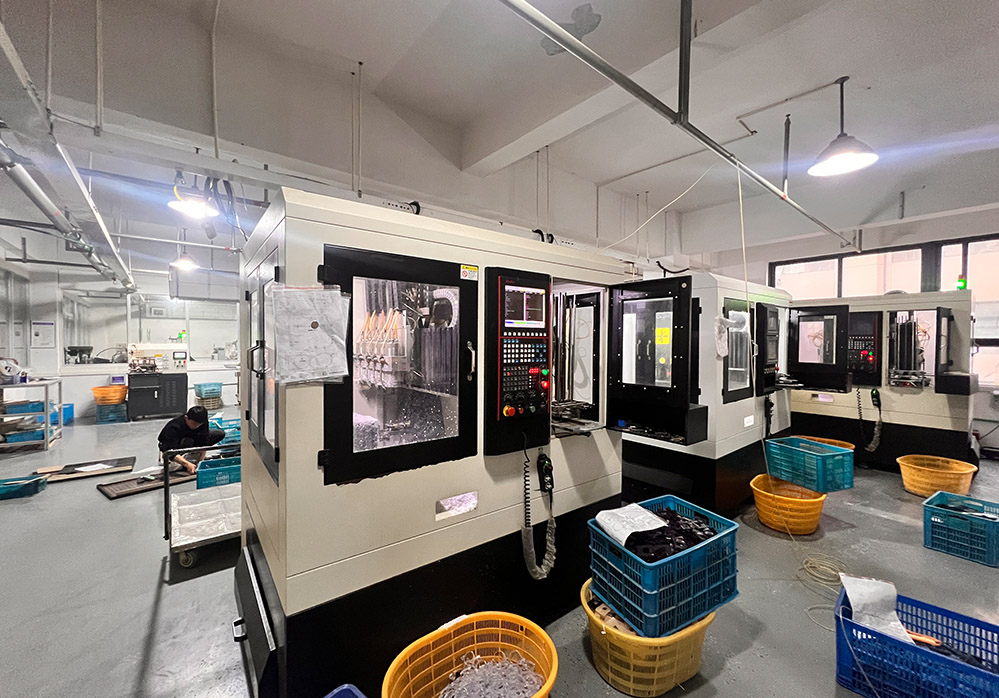
As a professional eyewear factory with over 18 years of manufacturing experience, we work as a product development partner, not just a manufacturer. Our engineering team joins design reviews, challenges structures, optimizes cost, and recommends materials from day one — because we know that the frames worth selling are the ones designed together. We welcome brands to bring us into the process early, and to let the factory do what a factory is actually for.