The Complete Eyewear Customization Process: 12 Key Stages from Design Sketch to Mass Shipment
August 29, 2026
The Complete Eyewear Customization Process: 12 Key Stages from Design Sketch to Mass Shipment
For many eyewear brands and retailers, "customization" (OEM/ODM) is both appealing and uncertain. It is appealing because custom production creates exclusive styles, builds brand barriers, and improves profit margins. The uncertainty comes from a lack of understanding of the manufacturing process — from a design sketch to thousands of finished pairs, what exactly happens in between? How long does it take? Which stages are most prone to issues?
As a professional eyewear manufacturer with over 18 years of experience, we believe that a transparent process is the first step in building trust. In this article, we break down the 12 key stages of eyewear customization, from requirement briefing to mass shipment, helping brands, wholesalers, and retailers fully understand every step of custom production — so they can collaborate more efficiently with manufacturers, reduce communication costs, and lower quality risks.

1. The 12 Key Stages in Detail
Stage 1: Requirement Briefing & Market Research
The starting point of the customization process is not design — it is communication. The brand needs to clearly convey to the manufacturer: target market (Europe/America/Southeast Asia/Middle East), target audience (age, gender, spending power), product positioning (premium/mid-range/value), expected price range, and core product category (optical frames/sunglasses/reading glasses/sports sunglasses).
A professional manufacturer will proactively provide market trend advice, competitor analysis, and product selection references at this stage. Our R&D team leverages its 3,000+ existing style library and global market data to help clients screen the most promising style directions, avoiding detours in the early design phase. This stage typically takes 3–5 business days and outputs a clear requirement confirmation document.
Stage 2: Style Design & Concept Approval
After requirements are confirmed, the design phase begins. Designers produce style sketches based on the requirement document, including front view, side view, top view, and wearing effect renderings. The sketches must specify the silhouette (round/square/aviator/cat-eye/polygon), key dimensions (frame width, bridge size, temple length), material selection (acetate/pure titanium/beta-titanium/stainless steel/TR90), and color scheme.
The core of this stage is "concept approval" — the brand needs to confirm whether the design direction matches brand identity, rather than getting caught up in detailed dimensions. Typically, 2–3 design proposals are provided for selection, and the design is finalized after 1–2 rounds of revisions. We support clients providing original design sketches for ODM development, as well as improved designs based on client reference images, flexibly meeting different brands' development needs.
Stage 3: 3D Modeling & Technical Drawings
After the design sketch is confirmed, it needs to be converted from a 2D sketch into a producible 3D digital model. 3D modelers use professional software (such as Rhino, SolidWorks) to build precise three-dimensional models, ensuring every curve, arc, and thickness matches the design intent.
Based on the 3D model, a complete technical drawing package is output, including: dimensioned drawings (full dimensioning with 0.1mm precision), cross-section views (showing internal structure and material thickness), hinge position drawings, nose pad specification drawings, lens shape drawings, and a Bill of Materials (BOM). Technical drawings are the sole technical basis for subsequent sampling and mass production, so the precision at this stage directly determines the final product quality. Our technical team internally reviews every drawing to ensure manufacturing feasibility and dimensional reasonableness.
Stage 4: Prototype Sampling (First Sample)
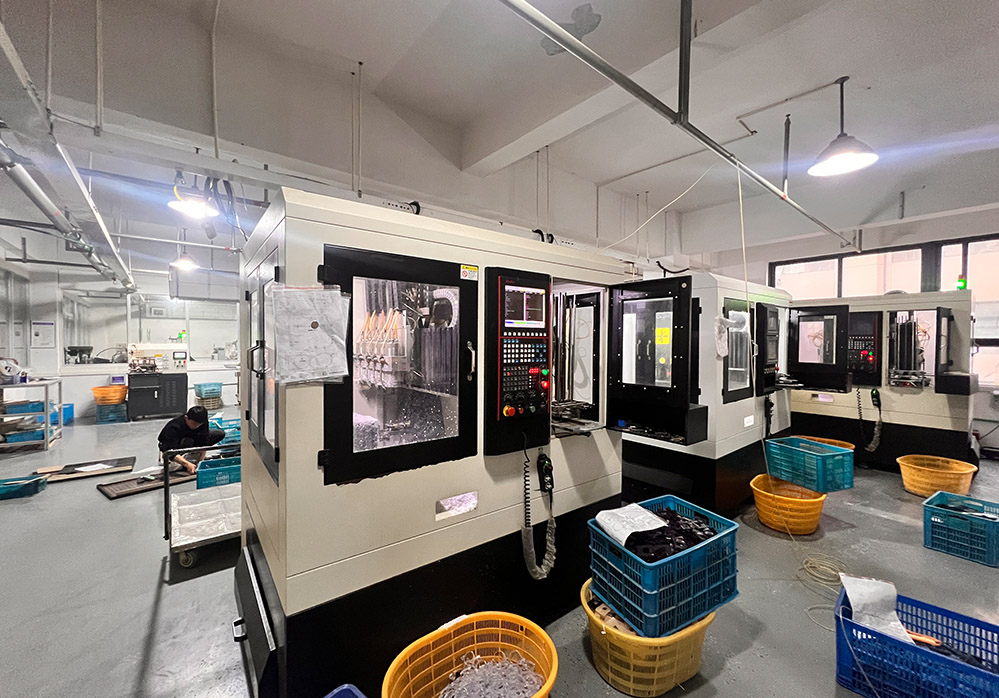
After technical drawings are confirmed, the prototype sampling stage begins — this is when the design sketch first becomes a physical object. Different materials require different sampling processes: acetate frames are cut from sheet blanks using CNC precision carving machines, then hand-shaped and polished; metal frames (titanium/stainless steel) are made from blanks via 3D printing or wire cutting, then formed through welding and surface treatment.
The purpose of the first sample is not to pursue perfection, but to verify three core questions: Are the dimensions accurate? Is it comfortable to wear? Does the visual effect match expectations? Typical sampling lead times are: acetate 7–10 days, metal 10–15 days, and complex structures or deeply custom styles may require 15–20 days. We provide free first-sample service for all clients (only a material deposit is charged, which is refunded in the bulk order), reducing the cost of trial and error for brands.
Stage 5: Sample Approval & Revision Iteration
After receiving the first sample, the brand needs to conduct a comprehensive evaluation: wearing experience (weight distribution, clamping force, nose pad fit), dimension verification (item-by-item comparison with technical drawings), appearance inspection (color, luster, detail craftsmanship), and alignment with brand identity. Evaluation results typically fall into three categories: approved directly, requires revision, or requires re-sampling.
In most cases, the first sample requires 1–2 rounds of revision iterations. Common revisions include: adjusting temple curvature to improve wearing comfort, fine-tuning frame width to fit target market face shapes, adjusting nose pad height to solve slipping issues, and modifying color or surface treatment effects. Each revision cycle takes about 5–7 days. The finally confirmed sample is called the "Golden Sample," which serves as the quality benchmark for mass production — it is sealed after both parties sign and confirm.
Stage 6: Raw Material Sourcing & Incoming Inspection
After the Golden Sample is confirmed, the mass production preparation phase begins, and the first step is raw material sourcing. Based on the BOM list, raw materials of corresponding specifications are purchased: acetate sheets (Italian imported/premium domestic), pure titanium/beta-titanium sheets or wires, stainless steel strips, TR90 pellets, hinges, screws, nose pads, lenses, and more.
All raw materials must undergo Incoming Quality Control (IQC) upon arrival. Inspection items include: material certification (acetate requires plant-based composition reports, metals require material certificates), dimensional specifications (sheet thickness, metal wire diameter), appearance quality (color difference, scratches, impurities), and physical properties (hardness, elasticity, temperature resistance). Non-conforming materials are returned directly to the supplier and never put into production. We have established long-term partnerships with multiple internationally renowned material suppliers, ensuring raw material stability and traceability.
Stage 7: Mold Development & Process Preparation
While raw materials are being prepared, mold development and process preparation take place. Different materials require different mold types: metal frames require stamping molds, welding fixtures, and forming jigs; acetate frames require CNC toolpath programs, polishing fixtures, and clamps; injection-molded materials such as TR90 require injection molds.
Mold development typically takes 7–15 days, with complex structures potentially taking longer. After molds are completed, trial molding (T0 trial) is conducted to verify mold precision and product forming quality. Meanwhile, process engineers confirm all process parameters: polishing time and polishing media ratio, plating temperature and current parameters, welding temperature and time, and LOGO printing position and parameters. All process parameters are verified during first-article production to ensure consistency in mass production.
Stage 8: Mass Production & In-Process Patrol QC
Once molds and processes are ready, formal mass production begins. The production flow varies by material: acetate frames go through sheet cutting → CNC precision carving → barrel polishing → hand finishing → hinge installation → temple adjustment → surface treatment; metal frames go through stamping/wire cutting → welding → grinding → plating → assembly → adjustment.
During mass production, quality control runs throughout. Before each process begins, First Article Inspection (FAI) is conducted — batch production only starts after the first article is confirmed to meet the Golden Sample standard. During production, In-Process Quality Control (IPQC) inspectors patrol every 2 hours, checking dimensions, appearance, and functional parameters. Critical processes (such as welding and plating) implement 100% full inspection. Our production workshop is equipped with a digital production management system that tracks production progress and quality data for each batch in real time, ensuring both delivery time and quality are controllable.
Stage 9: Surface Finishing (Polishing / Plating / Printing)
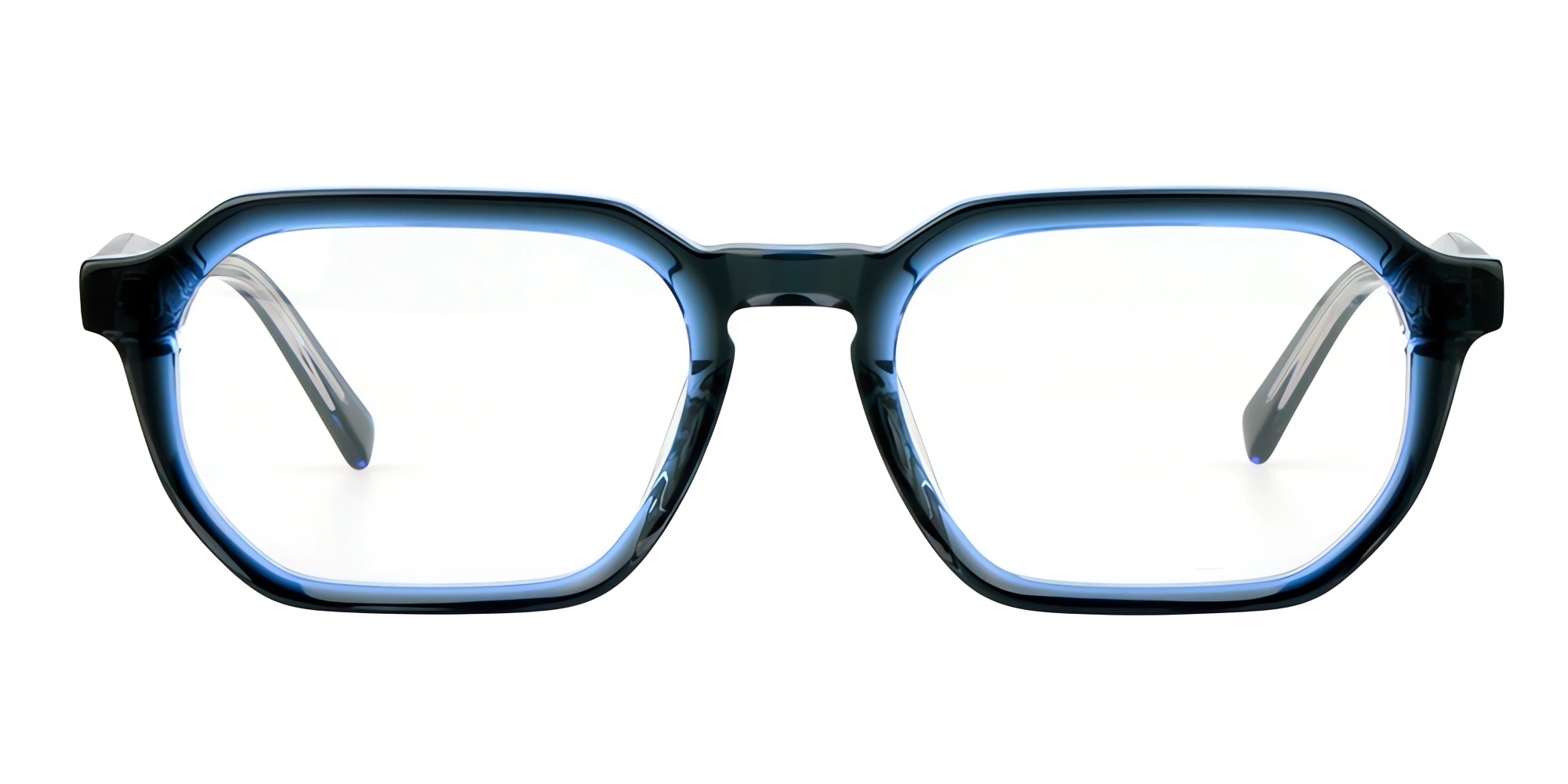
Surface finishing is the key process that determines the "premium feel" of eyewear. For acetate frames, the core of surface finishing is polishing: we adopt a 96-hour full polishing process, including wood-chip barrel rough polishing, medium barrel polishing, professional compound fine polishing, and finally hand finishing — resulting in a uniform, deep, crystal-clear luster.
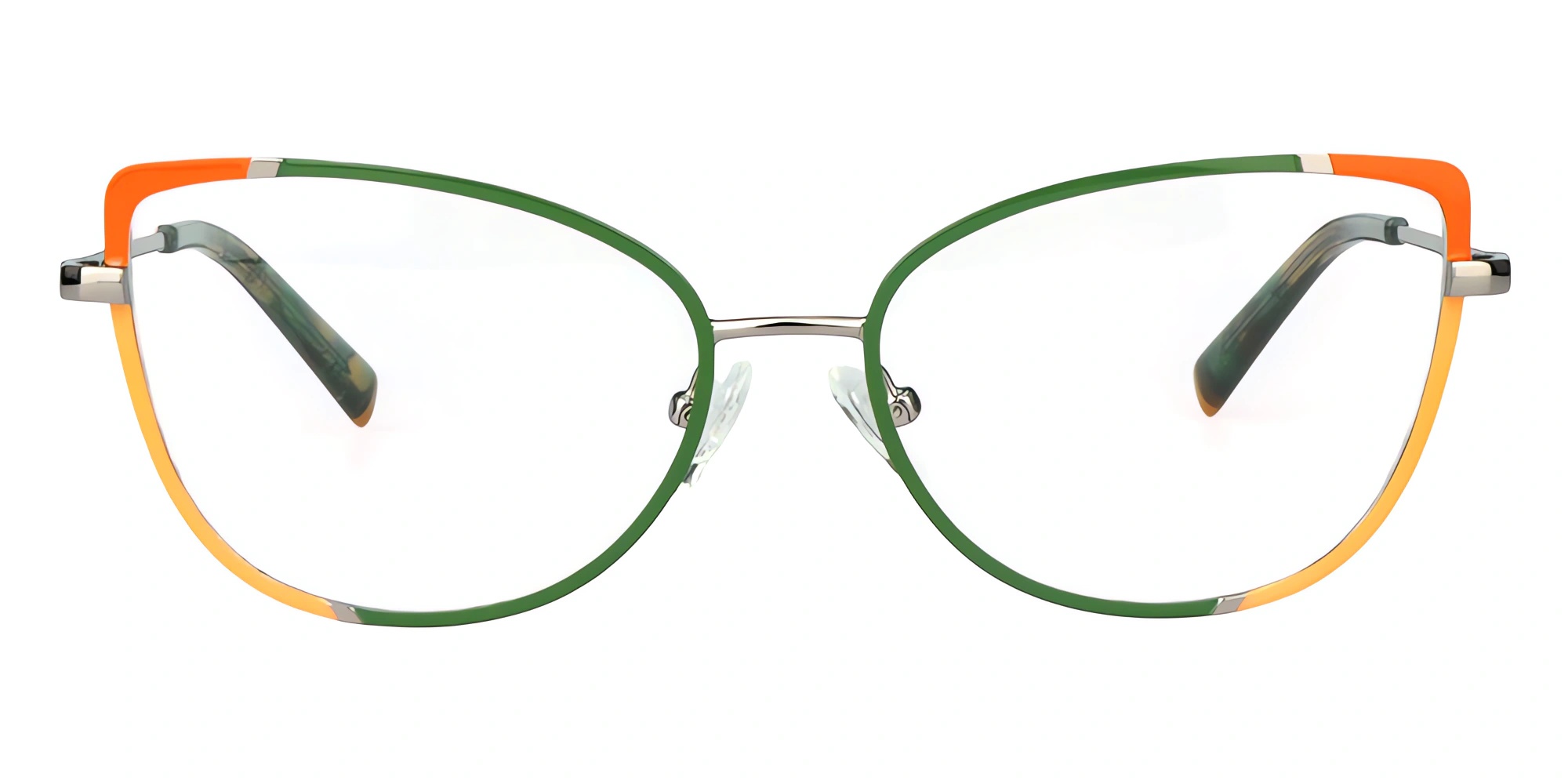
For metal frames, the core of surface finishing is plating. We use multi-layer vacuum plating and IP plating processes, with uniform, dense, highly adhesive coatings that present premium finishes such as gunmetal, brushed silver, soft gold, and rose gold. After plating, salt spray tests (24–48 hours) and abrasion resistance tests are conducted to ensure the coating resists fading, oxidation, and peeling.
LOGO customization is also an important part of surface finishing. Optional techniques include: laser engraving (precise and durable, suitable for metal and acetate), silk screen printing (rich colors, suitable for the inner side of acetate temples), hot stamping/gold foil (metallic feel, suitable for premium styles), and metal inlay (three-dimensional texture, suitable for luxury brands). Each technique has corresponding quality inspection standards.
Stage 10: Final Assembly & 100% Finished Goods Inspection
After surface finishing is complete, the final assembly stage begins. Assembly includes: hinge installation and adjustment, lens installation (optical frames require custom prescription lenses, sunglasses require tinted/polarized lenses), nose pad installation, temple angle adjustment, and overall wearing comfort fine-tuning. Every pair of glasses is hand-assembled by skilled assemblers, ensuring smooth opening/closing feel and stable, comfortable wear.
After assembly, 100% Finished Goods Quality Control (FQC) is conducted — this is the final quality checkpoint before shipment. Inspection items include: 100% appearance inspection (scratches, color difference, plating defects, printing quality), 100% dimension inspection (key dimensions compared with Golden Sample), 100% function inspection (hinge opening/closing feel, temple elasticity, nose pad fit), and lens inspection (prescription, astigmatism, optical center position, prism). At the same time, sampling tests are conducted per AQL standards: salt spray test, tensile test (hinge pull resistance), opening/closing test (5,000 cycles without loosening), and sweat resistance test. Non-conforming products enter the rework process, and those that cannot be reworked are scrapped directly.
Stage 11: Custom Packaging & Warehousing
Finished products that pass quality inspection enter the packaging stage. We provide complete custom packaging services, including: custom glasses cases (hard/soft/folding, brand LOGO printable), custom cleaning cloths (microfiber, brand pattern printable), product manuals (multi-language versions), hangtags/certificates (with brand information and product parameters), and custom outer cartons (printed with brand identity and shipping marks).
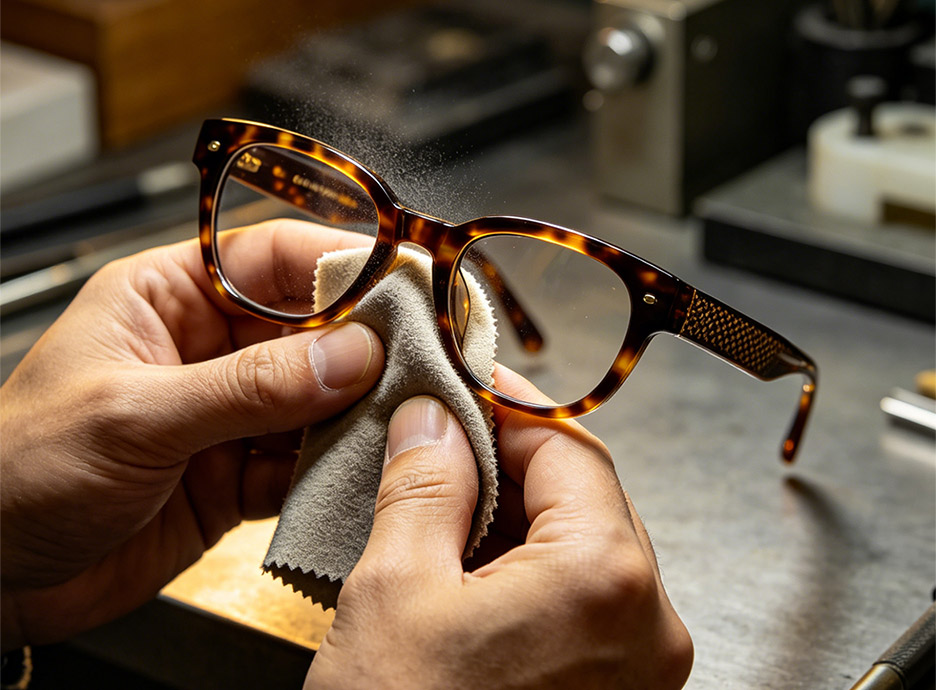
Before packaging, each pair of glasses undergoes final cleaning (ultrasonic cleaning + hand wiping), is wrapped in a PE protective film, placed in the glasses case, and then packed into the outer carton. Packing is strictly executed per the packing list, recording style number, color, quantity, and carton number for each carton to ensure traceability. Packaged finished products are warehoused, with the Warehouse Management System (WMS) recording batch, quantity, and location, awaiting shipment instructions.
Stage 12: Logistics, Shipment & After-Sales Follow-up
The final stage is shipment. Based on the client's requested logistics method (sea freight/air freight/international express), we assist with the complete export process including booking, customs declaration, and commodity inspection. Shipping documents include: commercial invoice, packing list, bill of lading/waybill, certificate of origin (CO/Form A/E), product test reports (such as CE/FDA certification reports), and quality inspection reports.
Shipment is not the end of service. We provide full after-sales follow-up: logistics tracking information is provided after goods are dispatched; customs clearance and receipt are followed up after goods arrive at the port; proactive follow-up calls are made after receipt to understand product quality feedback and market sales performance; for quality issues, rework, replacement, or compensation solutions are provided; for hot-selling styles, replenishment production is prioritized. This full-process service allows brands to focus on market sales without worrying about backend supply chain issues.
2. Customization Lead Time & MOQ Reference
Production lead times vary significantly by material and customization level. The following are standard reference lead times (calculated from Golden Sample confirmation):
| Product Type | Sampling Lead Time | Mass Production Lead Time | Standard MOQ |
|---|---|---|---|
| Acetate Optical Frames | 35–50 days | 90–110 days | 300 pcs/style |
| Metal (Titanium/Stainless Steel) Optical Frames | 35–50days | 90–110 days | 300 pcs/style |
| Acetate Sunglasses | 35–50 days | 90–110 days | 300 pcs/style |
| Metal Sunglasses | 35–50 days | 90–110 days | 300 pcs/style |
| TR90 Injection Frames | 10–14 days | 50–60 days | 500 pcs/style |
| Sports Sunglasses | 10–14 days | 50–60 days | 300 pcs/style |
| Reading Glasses | 35–40 days | 90–100 days | 500 pcs/style |
| Deep Customization (Private Mold / Exclusive Pattern) | 45–60 days | 90–110 days | 500 pcs/style |
For startup brands or small-batch test orders, we offer a flexible MOQ policy, with some styles as low as 100 pairs per style — helping brands test market response with a lower threshold.
3. Customization Service Advantages
Full-chain in-house production. Based in Wenzhou, we own our production base, covering the full production chain from design, sampling, mold making, cutting, polishing, and plating to assembly — without relying on external subcontractors. This ensures controllable lead times, stable quality, and optimized costs.
18+ years of industry experience and 3,000+ style library. Our core team members have over 18 years of eyewear manufacturing experience, with a library of 3,000+ mature styles covering optical, sunglasses, reading glasses, and sports categories. Clients can quickly customize based on existing styles or develop fully original private molds.
Strict quality control system. From raw material IQC to in-process IPQC and finished goods FQC, we have established a full-process quality control system. All products comply with international certification standards such as CE (EU) and FDA (US), with complete test reports and certification documents available.
Flexible small-batch customization. For startup brands and e-commerce sellers, we provide small-batch custom service as low as 100 pairs per style, supporting mixed colors and mixed sizes — reducing inventory risk and capital pressure for brands.
Conclusion: Transparent Processes Are the Foundation of Efficient Collaboration
Eyewear customization is not a simple "order-receive" transaction — it is a systematic engineering process involving 12 key stages. From requirement briefing to design confirmation, from 3D modeling to prototype sampling, from raw material inspection to mass production, from surface finishing to 100% quality inspection, every stage affects the quality, cost, and lead time of the final product.
For brands, understanding these 12 stages means: being able to raise the right requirements at the right time and make the right decisions at key nodes — thereby building an efficient, trusting collaborative relationship with the manufacturer. We always adhere to an open, transparent manufacturing philosophy and welcome eyewear brands, wholesalers, and retailers worldwide to visit the factory and experience every manufacturing stage from design sketch to finished product in person.